
HDPE Pipe Fittings Supplier for Hungary: Quality, Standards and Selection Tips
HDPE Pipe Fittings Supplier for Hungary helps buyers compare product types, standards, pressure ratings, and supplier capabilities so they can source compliant fittings for water, gas, irrigation, and industrial projects with less risk.
Table of Contents
What Does an HDPE Pipe Fittings Supplier for Hungary Actually Provide?
A dependable supplier brings far more to the table than just raw materials. They deliver a complete ecosystem of PE100 and PE80 fittings, alongside the welding gear and CE-certified paperwork needed for EU public works and private builds. When you’re sourcing wholesale HDPE components for Hungarian water projects, you aren’t just buying plastic. You’re securing a manufacturing partner equipped to handle end-to-end pipeline solutions.
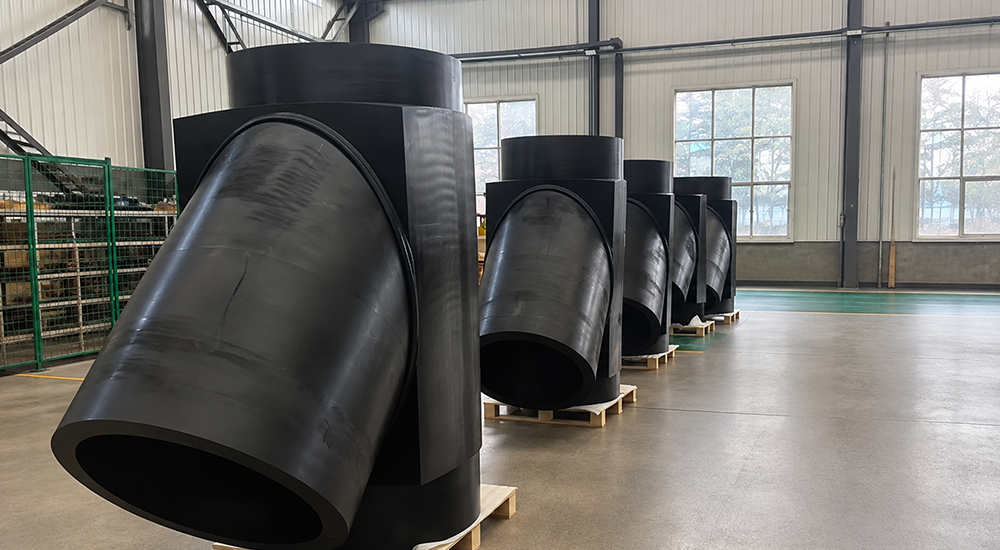
Top-tier manufacturers have the scale to guarantee project continuity. When choosing an HDPE Pipe Fittings Manufacturer for Hungary, buyers should pay close attention to production capacity and product range. Picture a 200-acre facility churning out over 100,000 tons annually—that level of production offers serious factory-direct scalability. Product ranges generally span from compact DN16 residential lines all the way up to massive DN3000 municipal mains. You’ll also find pressure ratings from PN4 through PN25, easily covering a wide spectrum of infrastructure demands.
It goes beyond the HDPE pipe fittings themselves. Whether your project calls for butt fusion, electrofusion, socket fusion, custom fabrications, or PP compression variants, a truly comprehensive supplier also provides the ancillary welding machines required for on-site assembly. This approach ensures a seamless transition right from the factory floor down into the trench.
Why Quality and Standards Matter for Hungarian Projects
Infrastructure initiatives in Hungary demand rigid compliance with EU directives. The Construction Products Regulation (CPR) takes center stage here, safeguarding public safety, environmental health, and long-term hydrostatic strength. Buying components without verifying these credentials first? That’s a fast track to severe compliance risks, crippling project delays, and heavy liability.
Under CPR (EU No. 305/2011), CE Marking is non-negotiable for construction materials sold across the European Economic Area (EEA). Skip this paperwork, and your products won’t legally clear Hungarian customs or survive municipal site inspections. Different applications also require very specific European standards. The EN 12201 series dictates the rules for plastics piping in water supply and pressure drainage, with EN 12201-3 zeroing in on HDPE pipe fittings. Meanwhile, the EN 1555 series strictly governs gas distribution networks.
Procurement managers can streamline their technical evaluations by verifying a few baseline specifications right out of the gate:
| Parameter | Specification Standard / Requirement |
|---|---|
| Material Grade | PE100, PE80 (High-Density Polyethylene) |
| Diameter Range | DN16 to DN3000 |
| Pressure Ratings (PN) | PN4, PN6, PN8, PN10, PN16, PN20, PN25 |
| SDR Classes | SDR11, SDR13.6, SDR17, SDR21, SDR26 |
| Water Standard | EN 12201-3 / ISO 4427 |
| Gas Standard | EN 1555-3 / ISO 4437 |
| Quality Verification | CE Mark, ISO 9001, ISO 14001, SGS Testing Reports |
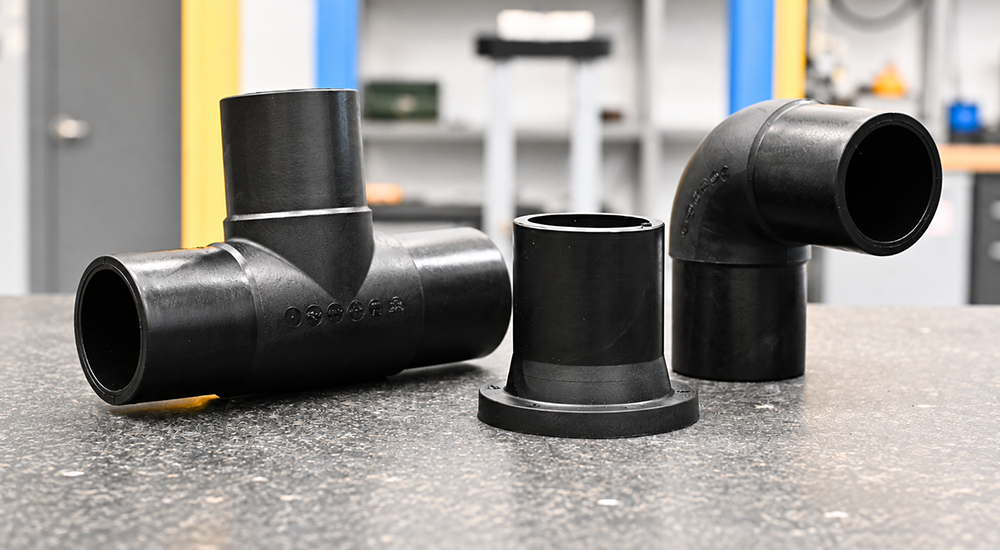
Main HDPE Fitting Types and Connection Methods
HDPE pipe systems generally rely on three primary connection methods: butt fusion, electrofusion, and mechanical compression. Each technique suits specific pressure requirements and installation environments, making the right choice absolutely critical for maintaining long-term pipeline integrity.
- Butt Fusion: Operators use a specialized heating tool to melt pipe ends together under pressure. The result is a permanent, seamless, leak-proof joint boasting immense tensile strength. Butt fusion fittings supplier Hungary method proves highly efficient for large-diameter pipes (DN110 to DN3000) laid in wide, open trenches.
- Electrofusion: These electrofusion fittings heat up internally via an embedded conductive polymer or copper wire coil. Fully approved to EN 12201-3 and EN 1555-3 standards, electrofusion delivers incredible reliability. It’s the go-to choice for tight spaces, trenchless repairs, and critical gas lines where bulky butt fusion rigs simply won’t fit.
- PP Compression Fittings: These mechanical connections usually handle smaller diameters (under 110mm). By tightening a nut, you compress a split ring and gasket, forming a watertight seal. Because crews can easily disassemble and reconfigure them, they are a favorite for agricultural irrigation.
- Flange Adapters / Stub Flanges: These pieces are essential for transitioning between HDPE and other materials like steel, ductile iron, or PVC. You’ll also need them to bolt pipelines directly onto valves and pumping stations.
Connection Method Comparison
| Connection Type | Best Use Case | Installation Complexity | Leakage Risk Profile |
|---|---|---|---|
| Butt Fusion | Open trench water mains, DN110+ | High (Requires heavy machinery) | Very Low (Permanent homogenous joint) |
| Electrofusion | Gas lines, tight spaces, repairs | Medium (Requires power source/scanner) | Very Low (Automated precision welding) |
| PP Compression | Temporary lines, agriculture, <DN110 | Low (Hand tools only) | Medium (Mechanical seal, can loosen) |
| Flange Adapters | System transitions, valve connections | Medium (Requires torque wrenching) | Low (Dependent on gasket integrity) |
Standards, Materials, and Pressure Ratings to Check Before Buying
Before issuing any purchase order, buyers have to verify material grades, Standard Dimension Ratios (SDR), and Nominal Pressures (PN) against EN 12201 or EN 1555 standards. Misunderstanding these core parameters is a common misstep—one that often leads to catastrophic system failures when surge pressures hit.
Your foundational material choice will almost always come down to PE80 versus PE100. Because PE100 delivers higher density and superior crack resistance, it serves as the default standard for high-pressure municipal water and gas distribution networks. Conversely, PE80 is typically reserved for lower-pressure applications or smaller-diameter rural lines.
The Standard Dimension Ratio (SDR) defines the precise relationship between a pipe’s outer diameter and its wall thickness. A lower SDR number means a thicker wall, which translates directly to higher pressure capacity. When dealing with PE100 materials, this correlation is exact:
- SDR11 = PN16 (1.6MPa)
- SDR17 = PN10 (1.0MPa)
- SDR26 = PN6 (0.6MPa)
Even visual identification falls under strict regulation. Water pipes and fittings usually feature a black body with blue stripes, or they might be solid blue. Gas infrastructure, on the other hand, requires distinctive orange or yellow coloring. This visual cue acts
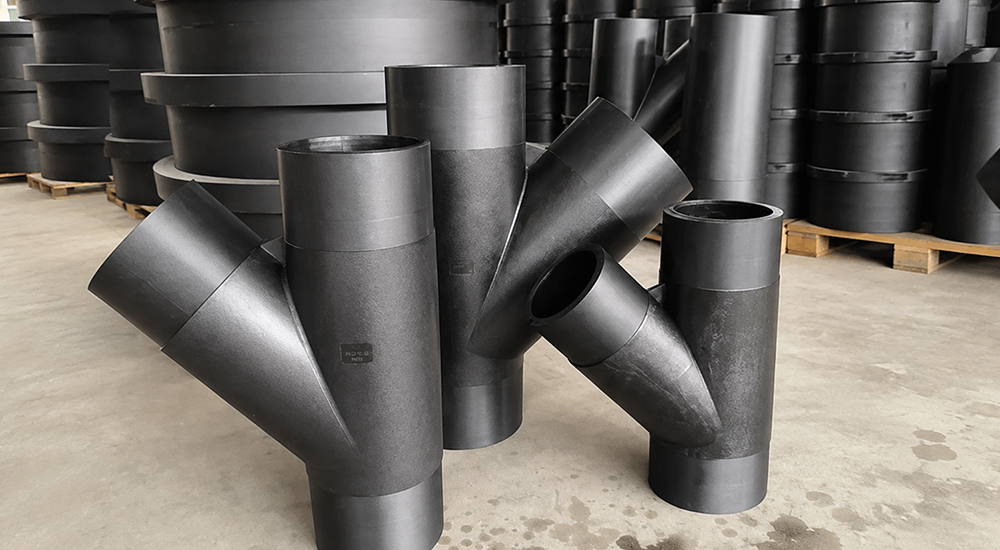
How to Select the Right Fittings for Your Application
Nailing down the right HDPE pipe fitting involves a methodical evaluation of the fluid medium, operating pressure, pipe compatibility, and any physical installation constraints. Sticking to a structured decision path is the best way to dodge expensive procurement errors.
Step 1: Medium & Standard Verification
Start by identifying the fluid. Potable water demands EN 12201 / ISO 4427 compliance to guarantee non-toxic materials. Natural gas requires EN 1555 / ISO 4437 certification, which heavily focuses on resisting gas permeability.
Step 2: Pressure Matching
The Nominal Pressure (PN) rating of the HDPE pipe fitting must always equal—or exceed—the PN rating of the pipe itself. If you downgrade the fitting’s pressure capacity, you immediately create a weak link within the hydrostatic network.
Step 3: Dimensional Compatibility
Double-check the exact outer diameter (DN) and wall thickness (SDR). If there is an SDR mismatch between a butt fusion fitting and the adjoining pipe, you’ll end up with an uneven internal lip. That lip disrupts fluid flow and creates dangerous stress concentrations.
Step 4: Installation Method Selection
Take a hard look at the job site. Electrofusion makes sense for cramped urban trenches or hazardous gas lines. Butt fusion is the better choice for long, straight water mains running through open fields. For temporary or agricultural lines, PP compression is the way to go.
Step 5: Documentation Clearance
Verify that your supplier can produce CE technical datasheets, material safety data sheets (MSDS), and SGS test reports. You will need these documents to clear EU customs and secure local Hungarian engineering approvals.
Typical Applications in Hungary: Water Supply, Irrigation, Gas, and Industry
Across Hungary, HDPE fittings serve as critical components for municipal water upgrades, expansive agricultural irrigation systems, natural gas distribution, and heavy industrial fluid transport. The sheer versatility of high-density polyethylene allows it to seamlessly adapt to vastly different infrastructural sectors.
Municipal Water Supply: When upgrading aging infrastructure, engineers specify PE100 components that comply with EN 12201. These underground potable water networks typically run on PN10 to PN16 ratings, relying heavily on butt fusion techniques and flange adapters to tie into existing municipal reservoirs.
Gas Distribution: Safety takes precedence over everything else here. Hungarian gas networks insist on EN 1555 compliance, pure PE100 materials, and the strict use of electrofusion fittings. This combination guarantees zero-leakage joints and robust, long-term resistance to ground movement.
Agriculture & Irrigation: Farming operations demand rapid assembly and easy modification. By pairing PP compression fittings with PE80 or PE100 pipes, agricultural crews can deploy, dismantle, and entirely reconfigure large-scale irrigation networks without hauling specialized welding equipment into the fields.
Industrial & Infrastructure: Industrial projects push beyond standard fluid transport. Contractors frequently deploy Modified Polypropylene (MPP) pipes (DN100-355mm) to protect trenchless underground cables. For heavy-duty gravity drainage and sewerage, they shift to Double-Wall Corrugated (DWC) pipes boasting SN4/SN8 ring stiffness.
*Case Example:* Imagine a municipal contractor in Budapest tasked with upgrading a localized water main. They will typically source SDR11 (PN16) PE100 pipe. However, because the urban trench is incredibly narrow and weaves through existing utility lines, bulky machinery won’t fit. The contractor will specify electrofusion HDPE fittings instead of butt fusion, allowing the compact welding gear to operate in the confined space while fully meeting EN 12201-3 standards.
How to Evaluate a Supplier: Price, MOQ, Lead Time, and Export Support
Any reliable supplier targeting the EU market has to offer transparent pricing, manageable MOQs, predictable lead times, and rock-solid export documentation. Finding a capable HDPE pipe fittings supplier for Hungary means looking beyond the base factory price and carefully comparing the overall HDPE Fittings Price in Hungary. You have to analyze the total landed cost alongside their logistical reliability.
- Lead Time: Idle sites burn through budgets. Top-tier manufacturers keep enough raw material inventory on hand to turn around standard bulk orders rapidly, often within 7 to 15 days.
- MOQ & Samples: Seek out suppliers offering flexible Minimum Order Quantities (MOQ) tailored to your specific project scope. They should also be willing to ship physical samples for on-site dimensional and quality testing long before mass production begins.
- Export Support: International logistics require precision. Your supplier must provide robust export packaging to prevent transit damage, supply accurate CE documentation, and draft commercial invoices and packing lists that perfectly align with EU customs protocols.
- Cost Factors: Always dig for hidden costs. Calculate the true total landed cost by factoring in EU import tariffs for plastics (which typically range from 0-12%), ocean freight to major European ports like Koper or Hamburg, inland transport to Hungary, and any third-party certification fees.
- Customization: Evaluate the manufacturer’s engineering depth. Can they provide custom extrusion profiles, fabricated fittings for awkward angles, or OEM branding services for wholesale distributors?
Common Buying Mistakes Buyers Make When Sourcing HDPE Fittings
Ignoring thermal expansion, mismatching SDR ratings, or gambling on non-CE certified fittings are surefire ways to derail a project. Sidestepping these common procurement blunders protects both your financial budget and your engineering timeline.
- Mistake: Purchasing non-CE certified fittings just to secure a lower unit price.
- Fix: Demand CE documentation and strict EN 12201/EN 1555 compliance upfront. Non-compliant materials will likely be seized at Hungarian customs or immediately rejected by the site engineers.
- Mistake: Mismatching the SDR/PN ratings between the pipe and the fitting.
- Fix: Verify that the fitting’s pressure rating is equal to, or higher than, the pipe’s rating. Trying to weld a thin-walled fitting to a thick-walled pipe severely compromises the joint’s integrity.
- Mistake: Selecting the wrong connection method for the physical environment.
- Fix: Avoid specifying butt fusion for cramped urban trenches where bulky heating plates and hydraulic clamps won’t fit. Switch to electrofusion fittings for those scenarios.
- Mistake: Mishandling storage protocols before installation.
- Fix: While good suppliers use UV-resistant additives, you still need to protect fittings from prolonged direct sunlight and extreme temperatures on-site to halt material degradation.
- Mistake: Overlooking hidden import expenses.
- Fix: Always calculate the total landed cost—factoring in freight and EU import duties—instead of making decisions based entirely on the FOB unit price.
Final Buying Checklist for Hungarian Buyers
Leverage this checklist when preparing your Request for Quotation (RFQ). Ensuring every technical and commercial requirement is addressed before you issue a purchase order drastically reduces sourcing friction.
- [ ] Application Defined: Detail the exact medium (Potable Water, Natural Gas, or Drainage) alongside the necessary European standard (EN 12201 or EN 1555).
- [ ] Specifications Matched: Lock in the exact outer dimensions (DN16 to DN3000), the material grade (PE80 or PE100), and the required SDR/PN ratings.
- [ ] Connection Type Selected: Explicitly state the required technology, whether that is Butt fusion, Electrofusion, Socket fusion, or PP Compression.
- [ ] Compliance Verified: Use the RFQ to formally request CE certification, ISO 9001 certificates, SGS test reports, and comprehensive technical datasheets.
- [ ] Commercial Terms Confirmed: Spell out the FOB/CIF unit price, Minimum Order Quantity (MOQ), expected 7-15 day production lead time, and export packaging standards.
- [ ] Samples Requested: Request physical samples of critical fittings to run on-site compatibility testing and quality checks before signing off on bulk manufacturing.
Frequently Asked Questions
Q1: What standards should an HDPE pipe fittings supplier for Hungary support?
A credible supplier has to back the EU Construction Products Regulation (CPR) by delivering CE-marked products. More specifically, they need to meet EN 12201 for water and drainage systems, and EN 1555 for gas distribution networks. Global counterparts such as ISO 4427 and ISO 4437—paired with ISO 9001 and ISO 14001 manufacturing certifications—also play a huge role in verifying baseline factory quality.
Q2: Which documents should I ask for before placing a bulk order?
Never issue a purchase order without first securing the CE Declaration of Performance (DoP), the relevant EN 12201 or EN 1555 compliance certificates, and technical datasheets that clearly outline pressure ratings (SDR/PN). You should also request material safety data sheets (MSDS), SGS or third-party lab testing reports, and ISO 9001 factory credentials. Having these on hand ensures smooth sailing through Hungarian customs.
Q3: Is electrofusion or butt fusion better for my project?
It depends heavily on your environment. Butt fusion is incredibly cost-effective and yields seamless joints for large-diameter pipes (DN110+), assuming you have open, spacious trenches. Electrofusion, however, outshines it in tight spaces, during trenchless repairs, or on critical natural gas lines where precision automated welding is non-negotiable. Ultimately, site access, pipe diameter, and safety parameters dictate the right choice.
Q4: How do I know whether the fittings are suitable for drinking water or gas use?
Look closely at the compliance standard and the color coding. Fittings meant for drinking water must satisfy EN 12201 / ISO 4427 to ensure the materials are non-toxic; these are usually black with blue stripes. Gas fittings, meanwhile, face the stricter EN 1555 / ISO 4437 standard regarding gas permeability. They feature distinct yellow or orange markings to prevent dangerous cross-contamination in the field.
Q5: What details should I include in an RFQ to get an accurate price?
For a precise quote, clearly specify the fluid medium, the material grade (PE80 or PE100), the exact outer diameter (DN), and the target pressure rating (SDR or PN). You also need to state the connection type (like electrofusion or butt fusion), mandatory compliance standards (CE/EN 12201), total order volume, and your preferred delivery terms (such as FOB or CIF).
Q6: How are MOQ and lead time usually handled for export orders to Hungary?
Leading manufacturers generally provide flexible Minimum Order Quantities (MOQs), though this often depends on whether you need a standard size or a custom fabrication. Production lead times for standard export orders are remarkably efficient, typically taking just 7 to 15 days. Keep in mind, however, that ocean transit to European ports will add several weeks to the timeline, so factor that into your project schedule early.
Q7: Can I order custom sizes or branded packaging from an overseas supplier?
Absolutely. Established overseas manufacturers have the engineering bandwidth to produce custom extrusion profiles and fabricated fittings tailored to tricky project angles. Many also offer comprehensive OEM services. This means you can request custom branding directly on the fittings, along with tailored export packaging—a massive advantage for wholesale distributors navigating the Hungarian market.
Conclusion
Tracking down the right pipeline components for Hungarian infrastructure projects demands tight technical alignment and an uncompromising approach to regulatory compliance. Your success hinges on verifying material grades like PE100, matching SDR and PN pressures precisely, and choosing the smartest connection method for your specific site conditions. Above all, validating CE marking alongside EN 12201 or EN 1555 standards ensures your components will sail through customs and hold up under intense pressure. When procurement teams rigorously evaluate a supplier’s manufacturing capacity, export paperwork, and lead times, they strip away hidden risks. The result? No costly installation failures, just long-term, reliable infrastructure.