
HDPE Pipe Fittings for Mining Pipelines: Wear Resistance and Project Considerations
HDPE Pipe Fittings for Mining Pipelines explains how wear resistance affects service life, which fitting types suit abrasive slurry service, and what procurement teams should check before ordering.
Table of Contents
What Are HDPE Pipe Fittings for Mining Pipelines?
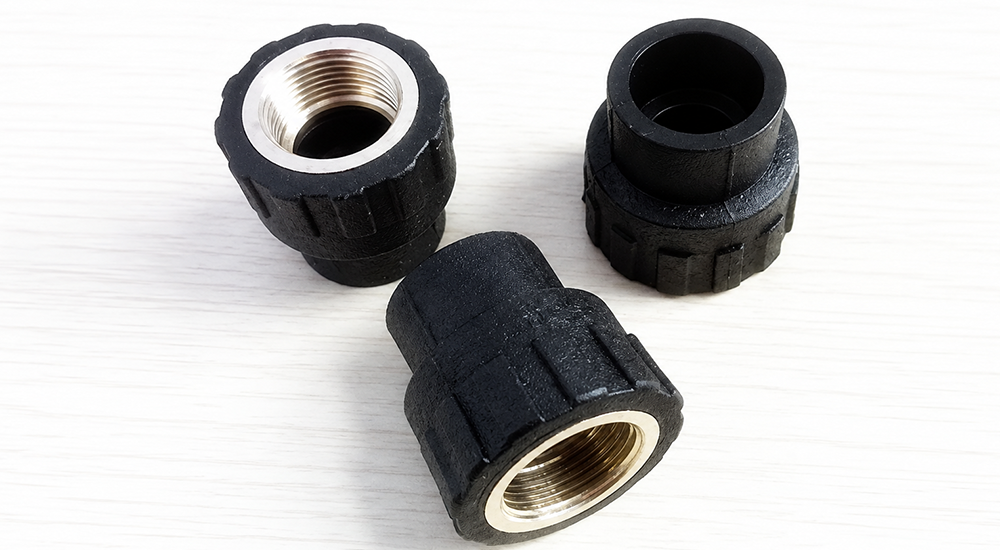
High-Density Polyethylene (HDPE) pipe fittings for mining pipelines serve as the critical junctions that connect, branch, and terminate complex slurry, tailings, dewatering, and process-water networks. Manufacturers craft these specialized components from premium industrial-grade resins—namely PE80, PE100, and PE4710. Today, these materials represent the global benchmark for high-pressure mining applications. Standard commercial plumbing fittings simply cannot survive here. Instead, engineers rely on mining-grade HDPE to endure extreme internal abrasion and relentless structural stress.
To handle the massive scale typical of mineral processing operations, JINQUAN produces these fittings in a vast array of sizes, starting at DN16 and scaling all the way up to a colossal DN3000. Pressure classes range from PN10 up to PN25 (10 to 25 bar). Strict adherence to international standards guarantees that these components integrate flawlessly into global engineering projects. Key specifications—including ISO 4427, ASTM F714, EN 12201, and AS/NZS 4130—rigidly define the material purity, pressure thresholds, and dimensional tolerances necessary for heavy industrial duty.
Why Wear Resistance Matters in Abrasive Mining Service
Transporting mining slurry is notoriously brutal. The fluid acts like liquid sandpaper, combining high operational pressures with aggressive chemical corrosion and relentless abrasion. Crushed ore and tailings tear away at pipeline walls constantly. Engineers deliberately choose HDPE pipe fittings for these harsh environments because the material possesses a unique molecular toughness. It absorbs the energy from particle impacts, resisting crack propagation far better than rigid, brittle alternatives like steel.
This superior wear resistance delivers measurable performance gains across the board:
- Flow Velocity Benchmark: HDPE pipelines comfortably manage slurry velocities between 3 and 5 m/s without suffering rapid wall degradation. Steel pipelines, conversely, usually max out at 1.5 to 3 m/s because faster flows accelerate abrasion to unacceptable levels.
- Impact Resistance: High-density polyethylene absorbs impacts up to 8 joules without cracking or failing. This ensures the pipeline maintains its structural integrity despite heavy external loads and the rough handling common on remote mine sites.
- Chemical and Corrosion Resistance: HDPE is naturally inert. It stays completely stable even when exposed to highly aggressive environments, easily handling acid mine drainage or alkaline processing fluids with pH levels ranging from 2 to 12.
- Friction Coefficient: A smooth internal bore drastically cuts down on flow turbulence. This reduces the energy required for pumping and eliminates the localized wear spots that frequently develop behind the weld seams of metal pipes.
Common HDPE Fitting Types Used in Mining Pipelines
Choosing the right HDPE pipe fitting type dictates the success of the entire pipeline network. The chosen manufacturing method directly dictates the fitting’s physical footprint, size availability, and overall pressure rating.
Here is a breakdown of the primary HDPE fitting categories utilized in the mining sector:
| Fitting Type | Manufacturing Method | Common Configurations | Specifications & Pressure Rating | Typical Size Limits |
|---|---|---|---|---|
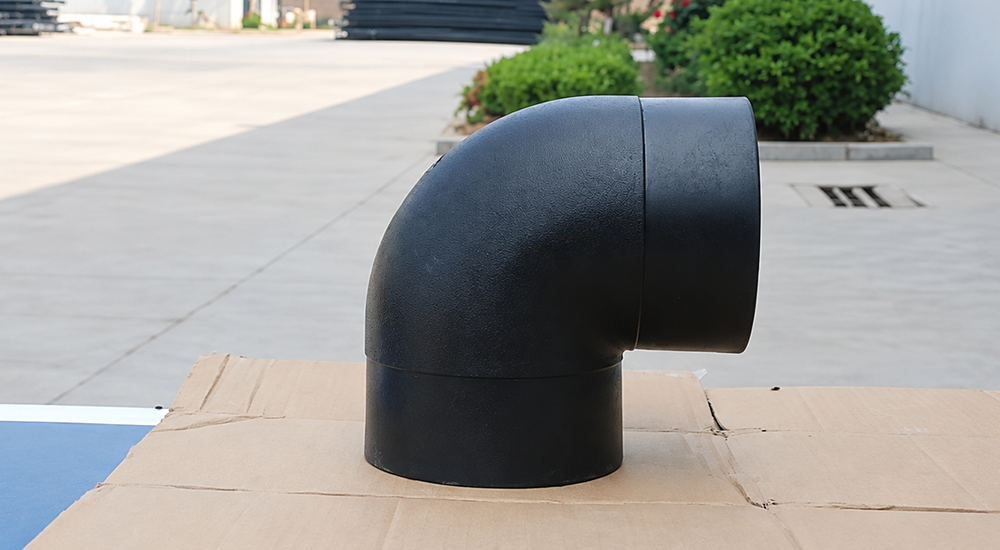
| Molded (Injection-Molded) | Injected as a single, seamless piece inside a mold | 45°/90° elbows, equal/reducing tees, end caps | Carries the full pipe pressure rating (zero derating needed). Offers highly uniform wall thickness. | Typically up to DN500–DN630 |
| Fabricated (Segmented) | Welded together from precisely cut pipe sections | Large-diameter elbows, tees, wyes (Y-branches) | Subject to pressure derating due to mitre welds. Requires strict SDR matching. | Available up to DN3000 |
| Electrofusion | Features embedded resistance-wire heating coils | Couplers, tapping saddles | Retains full pressure rating. Perfect for tight trenches, tie-ins, and field repairs. | Scales alongside pipe diameter |
| Flange Adaptors | Machined or molded stub ends paired with backing rings | Transitions to steel pipelines or metal valves | Matches the pressure rating of the connected HDPE pipe network. | Scales alongside pipe diameter |
Material, SDR, and Geometry Factors That Affect Performance
Two primary factors govern the structural performance of HDPE pipe fittings in mining applications: the physical geometry of the HDPE pipe fitting and its Standard Dimension Ratio (SDR). SDR represents the ratio of the pipe’s Outside Diameter (OD) to its Minimum Wall Thickness. A lower SDR means the wall is thicker, which directly translates to a higher pressure rating.
Consider an SDR 11 rating, which aligns with PN16 (16 bar). A DN315 SDR11 pipe boasts a robust wall thickness of 28.6mm. On the flip side, an SDR 17 rating drops the pressure capacity to PN10 (10 bar), giving that same DN315 pipe a thinner 18.5mm wall. To maintain system integrity, you must ensure the fitting’s SDR matches or exceeds the pipeline’s SDR.
Geometry also plays a massive role in pressure adjustments—especially for HDPE fabricated fittings. Engineers call this process “derating.” Segmented bends keep their full pressure rating as long as the cut angle doesn’t exceed 7.5°. Once those cut angles push to 15°, however, you must derate the fitting to roughly 0.8x the base pressure rating. Segmented tees and Y-junctions deal with even higher stress concentrations, requiring a steeper derating to about 0.5x the pipe’s original PN rating.
Pipeline design is also constrained by bend radius limits. For DR 7 to 9, the minimum bend radius sits at 20x the OD. Move to DR 11 to 13.5, and that requirement increases to 25x OD. Finally, for DR 15.5 to 17, expect a minimum bend radius of 27x OD.
How to Select the Right Fittings for Your Mining Project
Making the right choice means perfectly aligning the HDPE pipe fitting’s physical characteristics with the operational realities of your process water or slurry. When specifying fabricated components, engineers rely on the Equivalent Dimension Ratio (EDR) principle. To sustain the system’s full pressure without introducing a weak link, you should build fabricated fittings using pipe that is one SDR thicker than the primary pipeline (for instance, pairing an SDR 9 fitting with an SDR 11 pipeline).
Temperature introduces another crucial variable. Baseline pressure ratings for PE100 materials assume a standard operating temperature of 20°C. While HDPE easily handles fluid temperatures climbing up to 60°C, you must mathematically derate its pressure capacity following ISO guidelines as the heat increases.
Before finalizing your specification, use this parameter table to map out your exact project requirements:
| Selection Parameter | Technical Input Required | Impact on Fitting Choice |
|---|---|---|
| Pipeline Diameter | Outside Diameter (OD) in mm | Dictates whether molded (up to DN630) or fabricated (up to DN3000) components are needed. |
| Pressure Class | SDR or PN rating | Determines wall thickness. Fabricated tees will require EDR adjustments. |
| Slurry Velocity | Meters per second (m/s) | High velocities (exceeding 5 m/s) demand thicker walls to provide extra wear allowance. |
| Solids Concentration | Percentage by weight/volume | Heavier slurries drive up friction and accelerate localized wear at the elbows. |
| Operating Temp | Degrees Celsius (°C) | Any temperature above 20°C triggers ISO-standard pressure derating. |
| Jointing Method | Butt fusion, Electrofusion, Flanged | Defines the specific physical ends required on the manufactured fittings. |
Installation, Fusion, and Quality Control on Site
You can source the best HDPE fittings in the world, but their long-term reliability ultimately comes down to the quality of the fusion joints. For large-diameter mining applications, butt fusion reigns supreme. This method creates a monolithic structure that matches the strength of the pipe itself.
Crews must follow a rigid installation protocol:
1. Clean: Strip away all moisture, grease, and dirt from the HDPE fitting surfaces and pipe ends.
2. Align: Lock the components firmly into the fusion machine clamps to guarantee perfect concentricity.
3. Face: Use a mechanical facer to shave the ends down. This exposes virgin material and creates perfectly parallel mating surfaces.
4. Heat: Press the heater plate against the ends at the exact temperature required for the PE100 resin.
5. Press: Pull the heater plate away and drive the ends together, applying controlled, sustained force until the joint cools completely.
Job site quality control is absolutely non-negotiable. Today’s butt fusion machines come equipped with Dataloggers that offer real-time feedback via a graphical interface, meticulously recording the time, pressure, and temperature for every single weld. Inspectors then conduct a visual check of the fusion bead. It needs to roll back smoothly and uniformly around the entire circumference of the pipe. For critical, high-pressure mining lines, experts highly recommend Non-Destructive Testing (NDT), such as hydrostatic pressure testing or ultrasonic evaluation.
Cost, Lead Time, MOQ, and Project Planning Considerations
Securing materials for major mining EPC contracts demands a supplier who can push out massive volumes under punishing deadlines. JINQUAN steps up to this challenge with a sprawling 200-acre manufacturing facility capable of producing over 100,000 tons annually. This immense capacity guarantees a reliable bulk supply for complex international projects.
When mapping out project logistics, lead time takes center stage. Standard orders usually see a rapid turnaround of just 7 to 15 days. For remote mining operations across the globe, accessing factory-direct pricing alongside custom fabrication capabilities keeps budgets surprisingly efficient. To survive long-haul sea freight and rough overland transport, all HDPE fittings are secured with heavy-duty, export-grade packaging.
Looking at this through a capital expenditure (CapEx) lens reveals highly favorable lifecycle costs for HDPE systems. The initial procurement numbers are competitive, but the real financial win happens over the pipeline’s 50 to 100-year design life. Compared to traditional steel slurry lines, HDPE slashes maintenance downtime and drastically extends replacement cycles.
Common Mistakes and Hidden Risks in Mining Applications
Premium materials won’t save a project from catastrophic pipeline failures if the installation team cuts corners. Mining operators routinely run into a few critical, yet avoidable, hidden risks:
- Mistake 1: Ignoring Fabricated Derating. Treating a fabricated tee as if it shares the exact pressure rating of a straight pipe is a dangerous oversight. Fail to apply the correct derating calculations, and you put the entire system at severe risk of blowing out at the mitre welds.
- Mistake 2: SDR Mismatch. Trying to butt-fuse pipes and fittings that have different wall thicknesses (like joining an SDR17 fitting to an SDR11 pipe) is a recipe for disaster. This causes uneven melting and highly compromised joints. To do this correctly, you must use a dedicated transition fitting or deploy electrofusion couplers.
- Mistake 3: Poor Fusion Hygiene. If dust, grease, or moisture remains on the pipe ends during the heating phase, the polymer chains simply cannot bond. The result? Brittle, weak joints that will inevitably rupture under the intense pressure of mining slurry.
How to Evaluate a Supplier and Finalize the Specification
Selecting a manufacturer for your mining pipeline HDPE fittings involves rigorously vetting their quality assurance frameworks and technical bandwidth. A top-tier supplier functions as an engineering partner, rather than just a company pushing materials out the door.
Run potential suppliers through this evaluation checklist:
- Certifications: Demand proof of active ISO 9001 (Quality Management) and ISO 14001 (Environmental Management) credentials, alongside CE marks and independent SGS testing reports.
- Technical Engineering Support: Confirm that the supplier can run Equivalent Dimension Ratio (EDR) calculations for fabricated components. This is non-negotiable for guaranteeing system pressure integrity.
- Customization Capabilities: The manufacturer should have the in-house machinery to handle massive diameters (up to DN3000) and fabricate complex, custom angles. JINQUAN, for example, executes full-scale custom fabrication to accommodate highly specific site layouts.
- Data-Driven Quoting: A legitimate supplier won’t just throw a price at you. They will ask for detailed project inputs—including operating pressure, outside diameter, slurry characteristics, engineering drawings, and exact quantities—to perform a comprehensive technical review before issuing a final quote.
Frequently Asked Questions
Q1: What makes HDPE pipe fittings suitable for mining pipelines?
HDPE fittings deliver incredible wear resistance, effortlessly absorbing the punishing impact of abrasive mining slurries better than rigid steel alternatives. They boast supreme chemical resistance (easily managing pH levels ranging from 2 to 12) and feature a smooth internal bore that cuts down on friction. Furthermore, their ability to form leak-free, monolithic joints through butt fusion makes them the perfect fit for high-pressure mining tasks.
Q2: How long do HDPE fittings last in abrasive slurry service?
When engineered and installed correctly, HDPE fittings offer a robust design life spanning 50 to 100 years. That said, in highly abrasive slurry applications, the true lifespan hinges on solids concentration, operating pressure, and flow velocity. HDPE comfortably manages slurry velocities between 3 and 5 m/s, heavily outperforming steel pipelines subjected to the same abrasive wear and tear.
Q3: Which HDPE fitting type is best for elbows and direction changes in mining lines?
For pipeline diameters up to DN630, injection-molded elbows stand out as the premier choice because they retain the pipe’s full pressure rating without any need for derating. For massive pipelines stretching up to DN3000, engineers rely on fabricated (segmented) elbows. These fabricated pieces require meticulous engineering; any cut angle exceeding 7.5° mandates a strict pressure derating.
Q4: Can HDPE fittings handle high pressure in mining applications?
Absolutely. Mining-grade HDPE fittings crafted from PE100 resin confidently manage high pressures ranging from PN10 all the way to PN25 (10 to 25 bar). The Standard Dimension Ratio (SDR) dictates this pressure capacity. A lower SDR value points to a thicker wall, which safely contains the intense pressures necessary for moving process water and tailings.
Q5: Is butt fusion or electrofusion better for mining pipeline fittings?
Butt fusion remains the dominant industry standard for linking large-diameter mining pipelines, as it yields a seamless, monolithic bond that is literally as strong as the pipe. Electrofusion, however, shines during tie-ins, repairs, and tapping saddle installations in cramped trenches where bulky butt fusion rigs simply won’t fit. Both techniques deliver exceptional reliability when performed by skilled technicians.
Q6: What information should I provide to get an accurate quote for mining fittings?
To secure a precise technical quote, you need to supply the Outside Diameter (OD) in millimeters, the required PN or SDR rating, the jointing method, and the expected operating temperature. If you are pumping slurry, sharing the solids concentration (%) and the slurry velocity (m/s) allows the manufacturer to pinpoint the ideal wall thickness and Equivalent Dimension Ratio (EDR).
Q7: What are the most common failure points in mining pipeline fittings?
Most failures trace back to poor specification or sloppy installation. The biggest culprits include ignoring the strict pressure derating rules for fabricated tees, trying to butt-fuse pipes that have mismatched SDRs, and practicing terrible fusion hygiene (such as leaving moisture or dirt on the joint). These errors prevent a solid, monolithic bond from taking shape.
Q8: How do I compare different HDPE pipe fitting suppliers?
Judge potential suppliers on their technical support, manufacturing capacity, and verified quality certifications (such as CE, SGS, and ISO 9001). A formidable supplier should effortlessly handle massive diameters up to DN3000, deliver aggressive lead times (7 to 15 days), and supply robust in-house engineering support to calculate EDR and fabricate custom angles tailored specifically to your mine.
Conclusion
Selecting the right HDPE pipe fittings for mining pipelines requires careful consideration of pressure, abrasion, slurry characteristics, and material compatibility. For demanding mining applications, PE100 fittings can provide reliable performance when pipe diameter, SDR, pressure class, and joining method are correctly matched to the system requirements.
For fabricated fittings, engineers should also verify applicable design factors, pressure derating, and dimensional compatibility. Temperature, solids concentration, flow velocity, and installation conditions can all affect long-term pipeline performance.
By combining appropriate fitting selection with controlled fusion procedures and proper technical verification, mining operators can reduce installation risks, improve joint reliability, and support durable HDPE pipeline systems in abrasive and high-demand operating environments.