
HDPE Pipe Fittings for Underground Pipeline Systems: Installation and Selection Guide
HDPE Pipe Fittings for Underground Pipeline Systems explains how to choose the right fitting, size, and jointing method, then install and test it correctly to reduce leaks, rework, and project risk.
Table of Contents
What Are HDPE Pipe Fittings for Underground Pipelines?
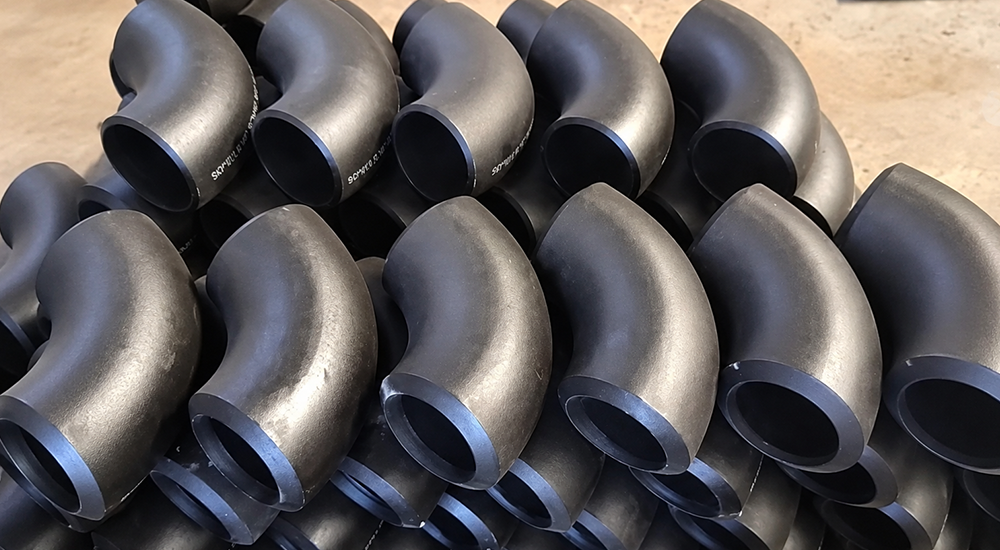
Engineered thermoplastic components known as HDPE pipe fittings serve a vital role in buried infrastructure. They connect, redirect, branch out, or cap off High-Density Polyethylene (HDPE) pipelines. You’ll find these crucial junctions at work across municipal water grids, natural gas lines, sewer systems, and industrial chemical transport networks.
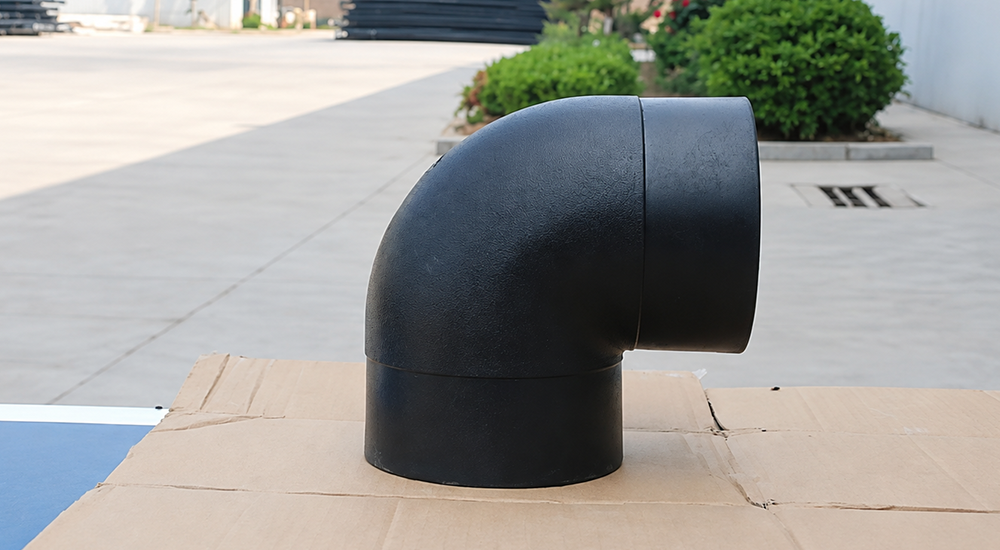
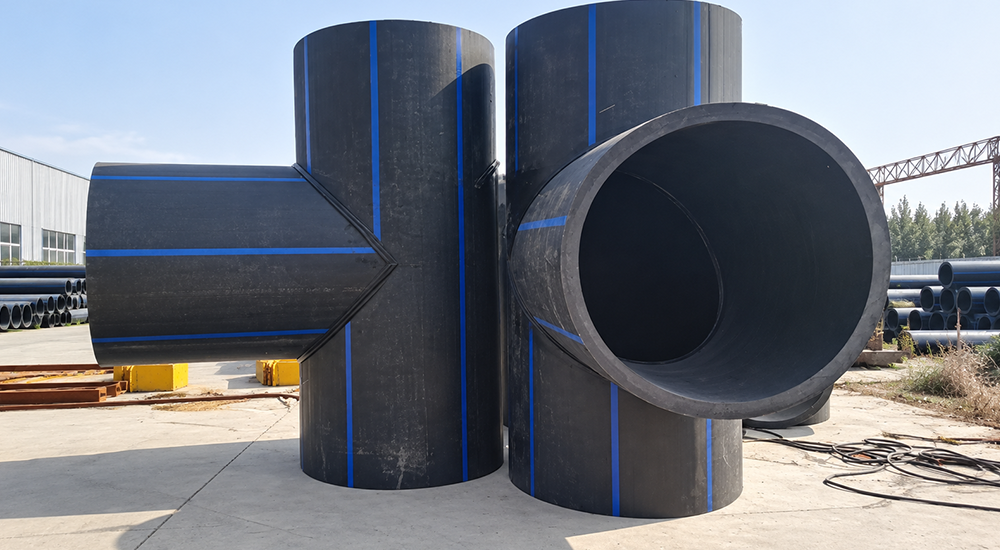
Manufacturers typically craft them from high-grade PE80, PE100, or PE4710 compounds. This robust material choice is necessary because the fittings have to survive harsh underground environments. They face constant soil loading, unpredictable ground movement, and intense hydrostatic pressure. Standard molded options generally cover diameters up to 12 inches (DN300). For massive infrastructure jobs, however, custom-fabricated pieces like segmented tees, reducers, and elbows can scale all the way up to 65 inches (DN1600+).
Why HDPE Is Used for Underground Pipeline Systems
HDPE routinely beats out traditional metals and rigid plastics for buried infrastructure. The secret lies in its mechanical properties. Take surge pressures, for example—HDPE manages them far better than PVC. PVC’s rigidity makes it vulnerable. It easily falls prey to point-loading or cracking during seismic events and soil subsidence. HDPE, by contrast, brings inherent flexibility to the table. The pipeline actually bends alongside shifting soils, absorbing heavy impacts rather than fracturing.
CPVC might handle hot water better (up to 200°F), but bury it and it turns brittle. For transporting ambient-temperature fluids underground (up to 140°F), HDPE remains the smarter play. Yet, the material’s biggest selling point is joint integrity. Heat fusion turns HDPE connections into a single, continuous, self-restrained system. Groundwater can’t seep in. The transported fluid can’t leak out. The result is a fully sealed network engineered to last anywhere from 50 to 100 years.
Main Types of Underground HDPE Pipe Fittings
Finding the right way to join your pipes comes down to a few variables: trench conditions, pipe diameter, and specific project constraints. Underground HDPE systems generally rely on three core jointing techniques.
| Jointing Method | Fitting Type | Best Application | Advantages | Limitations |
|---|---|---|---|---|
| Butt Fusion | Molded / Fabricated | Main distribution lines DN90 (3") and larger | Creates a fully monolithic, full-strength joint without extra components. | Requires space for bulky welding machines; cannot be done in wet trenches. |
| Electrofusion | Electrofusion Couplers / Saddles | Tight trench spaces, repairs, and diameters up to 250mm | Ideal for confined spaces; highly automated and reliable. | Fittings are more expensive; requires meticulous pipe scraping and cleaning. |
| Mechanical Joints | Flanges / Compression Adapters | Transitions to ductile iron valves or existing PVC lines | Easy assembly in wet, dirty conditions; allows for future disassembly. | Requires internal stiffeners; relies on gaskets which may degrade over decades. |
How to Select HDPE Fittings by Pipe Size, SDR, and Application
Building a reliable underground pipeline means matching your HDPE fitting specs perfectly to the system’s daily demands. The Standard Dimension Ratio (SDR) sits at the heart of this process. SDR measures the ratio of a pipe’s outside diameter against its wall thickness. Drop the SDR number, and you get a thicker wall with a higher pressure threshold.
When working with PE100 material—which carries a Minimum Required Strength of 10.0 MPa—engineers calculate Nominal Pressure (PN) using a straightforward formula: PN = (20 × σ) ÷ (SDR − 1).
- SDR 17 delivers PN 10 (10 bar / ~145 psi)
- SDR 11 steps up to PN 16 (16 bar / ~232 psi)
- SDR 26 provides PN 6 (6 bar / ~87 psi)
Underground Selection Criteria Table:
| Parameter | Specification Range | Design Consideration |
|---|---|---|
| Diameter (OD) | DN16 to DN3000 | Match internal flow requirements and velocity limits. |
| Pressure Rating | PN4 to PN25 | Must exceed the maximum system operating pressure plus surge allowances. |
| Material Grade | PE80, PE100, PE4710 | PE100/PE4710 offer higher stress resistance and thinner walls for identical pressure. |
| Burial Depth | 2 ft to 25+ ft | Deep burials (e.g., landfill leachate systems up to 100 ft) require lower SDRs to resist crushing. |
Underground HDPE Pipe Installation: Trench, Bedding, and Preparation
A long-lasting underground pipeline starts long before the first pipe goes into the ground—it begins with the trench. Workers need enough width to safely execute fusion welds and thoroughly compact the backfill. If you’re working with pipes 15 inches and under, aim for a trench width equal to the Outside Diameter (OD) plus 16 inches. For larger pipes (18 inches and up), calculate the width as 1.25 × OD, then add 12 inches.
Pre-Installation Checklist:
- Bedding: Lay down 4 to 6 inches of approved bedding material directly beneath the pipe. This prevents sharp rocks from pressing into the plastic.
- Clearance: Maintain at least 0.6m (24 inches) of cover in areas without traffic. Under roadways, push that depth to between 0.9m and 1.2m. This clears the frost line and safely disperses the weight of heavy vehicles.
- Equipment: Have calibrated fusion machines ready. Secure the right lifting slings as well—never use steel cables, as they will aggressively gouge the polyethylene surface.
HDPE Fittings Installation: Butt Fusion, Electrofusion, and Mechanical Joints
Getting the jointing process right isn’t just important; it’s completely non-negotiable for buried networks. Here is a breakdown of the standard procedures for the three main connection methods.
Butt Fusion Sequence:
1. Lock the pipes firmly into the butt fusion machine clamps so they cannot shift out of alignment.
2. Shave the pipe ends with a mechanical planer. This exposes a clean, smooth, and perfectly parallel virgin surface.
3. Insert the heating plate. Keep the temperature strictly between 400°F and 450°F (204°C – 232°C).
4. Pull the heater plate out and push the molten pipe ends together. Maintain steady, controlled pressure until the new joint cools completely.
Electrofusion Sequence:
1. Wipe down the pipe ends to eliminate all traces of moisture and dirt.
2. Run a mechanical peeling tool over the outer surface of the pipe ends. Do not skip this—removing the oxidized layer is absolutely mandatory.
3. Slide the freshly prepped pipe ends straight into the electrofusion fitting.
4. Hook up the control box. Send the designated electrical current through the embedded coils to melt and bond the polymer.
Mechanical Joint Sequence:
1. Clean off the pipe end and check closely for any deep scratches or gouges.
2. Push an internal stiffener into the HDPE pipe. This stops the plastic wall from caving in under heavy compression.
3. Slip the mechanical fitting over the pipe. Tighten the compression nut or bolts to the exact torque specified by the manufacturer to lock down the gasket seal.
Pressure Testing, Inspection, and Backfilling
After assembling the pipeline in the trench, you can’t just bury it immediately. It first needs rigorous field leak testing based on ASTM F2164 standards. The hydrostatic test pressure generally hits 1.5 times the system’s intended design pressure. However, you must cap this at 1.5 times the rating of the weakest component in that specific line.
HDPE naturally expands under pressure. To account for this, technicians use the Pressure-Rebound Method. They fill the line, let it thermally stabilize, and hold it under pressure for four hours to accommodate that initial expansion. Next, they drop the pressure slightly and watch the gauges for an hour. If the pressure levels out (P90 > 70% of test pressure) rather than continuously falling, the system passes.
Post-Installation Checklist:
- Visually inspect every joint. Look for a uniform double-rollback bead on butt fusions and check that the indicator pins have popped up on electrofusion fittings.
- Run the hydrostatic test and carefully document all pressure logs.
- Pour in the initial backfill. Stick to ASTM D2321 Class I (angular crushed rock) or Class II (clean coarse sands or gravels).
- Compact the initial backfill and the haunch area to between 85% and 95% Standard Proctor density, adjusting for your site’s exact soil profile.
Common Underground HDPE Installation Mistakes
Modern PE100 and PE4710 resins almost never fail on their own. When a buried HDPE pipeline actually ruptures, external factors or sloppy procedures are usually to blame.
Poor trench bedding ranks as the most common hidden danger. If hard debris or jagged rocks rest directly against the plastic wall, they create intense point loads. Over time, this drives slow crack growth.
Electrofusion presents another major risk area. If installers fail to thoroughly scrape the pipe ends, a microscopic oxidation layer remains. The embedded coils will still melt the plastic, but that lingering oxidation blocks true molecular entanglement. The result? A weak joint destined to blow out under pressure. Lastly, ignoring thermal expansion and contraction before backfilling throws massive, unintended stress onto transition HDPE fittings and mechanical joints.
HDPE Pipe Fittings Price, MOQ, Lead Time, and Supplier Evaluation
Municipal contractors and B2B procurement managers know that a rock-solid supply chain matters just as much as the technical specs. Vetting a supplier means digging into their delivery logistics, manufacturing footprint, and quality control track record.
Consider a tier-one manufacturer like JINQUAN. Operating across a 200-acre campus with more than 40 high-speed extrusion lines, they push out over 100,000 tons annually. That kind of massive scale guarantees stable inventory for sprawling municipal builds while locking in factory-direct pricing. Standard lead times hover between 7 and 15 days—a tight window that helps keep expensive project downtime to an absolute minimum.
As you evaluate any HDPE fittings partner, always ask to see multi-standard certifications like ISO 4427, ASTM F714, CE, and ISO 9001. Demand transparent material traceability documents. Finally, make sure the factory actually backs up its products with strong technical support, covering everything from complex molding specs to on-site installation advice.
Applications and Final HDPE Fittings Selection Checklist
You will find HDPE pipe fittings working quietly across an enormous range of subterranean applications. Heavy-duty use cases span natural gas transmission, municipal drinking water grids, and sanitary sewer networks. They also handle aggressive industrial chemical transport, massive agricultural irrigation layouts, and mining dewatering operations.
Before signing off on a purchase order, project engineers should run through this quick HDPE pipe fittings selection guide checklist to guarantee long-term system reliability:
- Diameter (DN/OD): Are you certain the HDPE fitting perfectly matches the pipe’s outer diameter?
- SDR/PN Rating: Does the HDPE fitting match—or ideally exceed—the pressure rating of the pipeline itself?
- Material Grade: Have you specified PE100 or PE4710 to ensure maximum structural durability?
- Jointing Method: Does your chosen mechanical or fusion technique actually make sense for the current trench conditions?
- Soil/Trench Conditions: Did you explicitly specify Class I or Class II bedding materials?
- Operating Parameters: Are maximum burial depths and potential surge pressures fully accounted for in your design calculations?
Frequently Asked Questions
Q1: What are HDPE pipe fittings used for in underground pipeline systems?
These components branch, redirect, connect, or cap off buried polyethylene lines. You need them to build municipal water grids, sewer infrastructure, natural gas networks, and industrial fluid systems. They deliver corrosion-resistant, leak-proof junctions capable of shrugging off high hydrostatic pressure and shifting soils.
Q2: Which is better for underground HDPE pipelines: butt fusion or electrofusion?
Both techniques yield incredibly strong, monolithic connections. However, butt fusion usually wins out on cost and efficiency for long, straight mainlines (DN90 and larger). Electrofusion, on the other hand, dominates in tight trenches, repair scenarios, and smaller-diameter jobs where heavy butt fusion equipment simply won’t fit.
Q3: How do I choose the correct SDR and pressure rating for buried HDPE fittings?
Your choice hinges on two main factors: burial depth and maximum operating pressure. The Standard Dimension Ratio (SDR) determines the wall thickness. Drop the SDR, and you increase both wall thickness and the pressure rating (PN). A PE100 SDR 11 fitting, for instance, carries a PN16 (232 psi) rating. That makes it a great fit for deep burials and high-pressure zones.
Q4: Can HDPE fittings be installed directly in a trench without concrete encasement?
Absolutely. Manufacturers design HDPE fittings specifically for direct burial, meaning you can skip the concrete encasement. You do, however, need to surround them with 4 to 6 inches of quality bedding material—think ASTM D2321 Class I or II sand or crushed rock. This step prevents sharp stones from creating point loads and guarantees uniform support.
Q5: What are the most common reasons underground HDPE joints fail?
The plastic itself rarely fails. When joints break, it usually points back to sloppy installation. Common culprits include skipping the scraping process before electrofusion, applying too little heat during butt fusion, or allowing point loading due to terrible trench bedding. Third-party excavation strikes also account for a significant number of field failures.
Q6: How do you test an underground HDPE pipeline after installation?
Contractors rely on the hydrostatic Pressure-Rebound Method (ASTM F2164). First, they fill and pressurize the system to 1.5 times its design limit, holding it there for four hours while the plastic expands. Next, they reduce the pressure slightly. As long as the pressure stabilizes over the next hour without a continuous drop, the pipeline passes the test.
Q7: What should I ask an HDPE fitting supplier before placing an order?
Always demand documented proof of material grades (like PE100 or PE4710) alongside multi-standard certifications (CE, ASTM, ISO 4427). You should also ask hard questions about their production capacity, minimum order quantities, and average lead times (which should sit around 7 to 15 days). Finally, find out if they offer real technical support for field installations and custom fabrications.
Conclusion
Building an underground pipeline that actually lasts requires you to nail the fitting specifications and installation procedures. High-Density Polyethylene simply outclasses traditional rigid materials, offering unbeatable joint integrity, flexibility, and surge resistance. By accurately calculating SDR and pressure ratings, enforcing strict bedding protocols, and overseeing flawless fusion welds, engineers can build resilient networks capable of surviving for a century. Securing a supplier with massive manufacturing scale, transparent material traceability, and strict adherence to ISO 4427 and ASTM F714 standards serves as the final safeguard for your system’s structural integrity.