
PE100 vs PE80 HDPE Pipe: Material Strength, Pressure Rating and Applications
PE100 vs PE80 HDPE Pipe explains how material strength, pressure rating, SDR selection and applications differ, helping engineers and buyers choose the right grade for water, gas, mining or industrial projects.
Table of Contents
PE100 vs PE80 HDPE Pipe: Quick Comparison
Material strength sits at the core of the PE100 versus PE80 debate. Specifically, PE100 boasts a Minimum Required Strength (MRS) of 10.0 MPa, easily outpacing the 8.0 MPa offered by PE80. Why does this matter? That extra muscularity allows PE100 to hit the exact same pressure rating (PN) while shedding wall thickness (utilizing a higher SDR). This dynamic unlocks better internal flow capacity and drastically reduces the overall weight of the pipe. Even so, PE80 remains incredibly valuable, particularly for lower-pressure setups and legacy gas distribution networks where flexibility is paramount.
Below is a quick technical comparison between the PE100 HDPE pipe and PE80 HDPE pipe:
| Parameter | PE100 HDPE Pipe | PE80 HDPE Pipe | Technical Advantage / Buyer Consideration |
|---|---|---|---|
| Material Type | High-Density Polyethylene (HDPE) | Medium-Density Polyethylene (MDPE) / Older generation PE material | PE100 is a newer generation polyethylene material with improved mechanical performance. |
| Minimum Required Strength (MRS) | 10.0 MPa | 8.0 MPa | PE100 provides higher resistance to long-term internal pressure and external loads. |
| Hydrostatic Design Stress (20°C) | 8.0 MPa | 6.3 MPa | PE100 can withstand higher operating pressure with the same wall thickness. |
| Pressure Rating | Higher pressure capacity | Lower pressure capacity | PE100 is preferred for high-pressure water, gas, and industrial pipeline systems. |
| Wall Thickness (Same Pressure Class) | Thinner wall design (Higher SDR) | Thicker wall design (Lower SDR) | PE100 reduces material consumption and allows a larger internal diameter. |
| Internal Diameter | Larger ID due to thinner wall | Smaller ID due to thicker wall | PE100 provides higher flow capacity and lower pressure loss. |
| Flow Capacity | Higher flow efficiency | Standard flow performance | PE100 is advantageous for large-diameter and high-flow applications. |
| Stiffness | Higher rigidity | More flexible | PE100 performs better under external loads and buried conditions. |
| Crack Resistance | Improved resistance to slow crack growth | Lower than PE100 | PE100 provides longer service reliability in demanding applications. |
| Service Life | 50+ years under normal operating conditions | 50+ years under suitable conditions | Both have long service life, while PE100 offers better long-term pressure performance. |
| Typical Applications | Municipal water supply, gas distribution, mining, industrial pipelines, large-diameter pipelines | Low-pressure water supply, irrigation, general applications | PE100 is preferred for modern infrastructure and high-performance pipeline systems. |
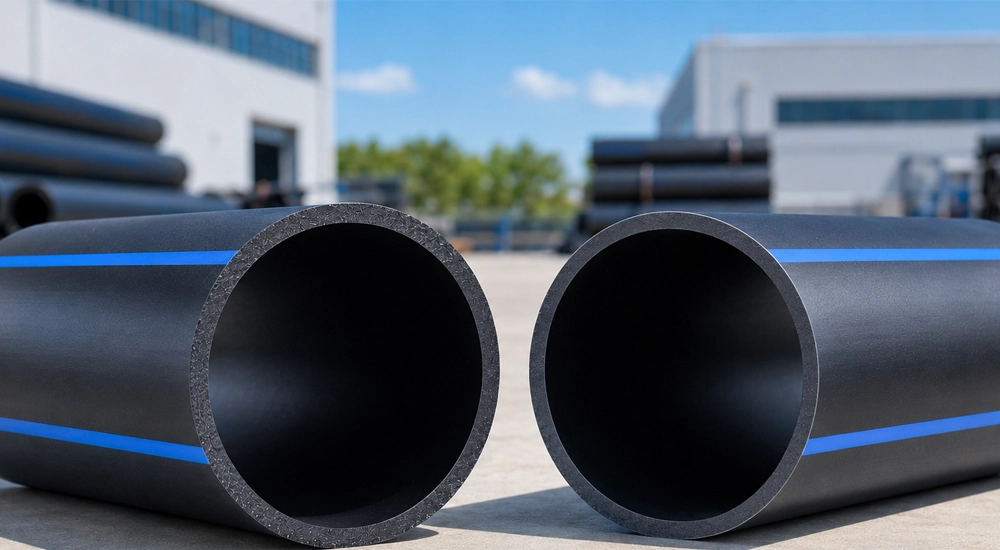
What Do PE100 and PE80 Mean in HDPE Pipe?
Smart engineering decisions start with understanding what these classifications actually represent. They aren’t random numbers pulled from thin air. International testing standards strictly dictate these material designations.
What is PE100?
Think of PE100 as the modern heavyweight for high-pressure thermoplastic lines. It refers to a specific polyethylene grade engineered to endure a minimum circumferential stress of 10.0 MPa. It can sustain this load continuously for half a century at an ambient 20°C without a single structural failure.
What is PE80?
PE80, on the other hand, withstands a minimum circumferential stress of 8.0 MPa under identical conditions (50 years at 20°C). Sure, it lacks the raw tensile strength of its PE100 counterpart. However, it compensates with incredible flexibility and top-tier fatigue resistance.
MRS (Minimum Required Strength)
Minimum Required Strength (MRS) serves as the baseline metric for classifying these pipe grades. Experts determine this value through rigorous long-term hydrostatic pressure tests, applying complex ISO 9080 regression analysis. The final grade classification falls squarely under the ISO 12162 framework.
SDR (Standard Dimension Ratio)
Standard Dimension Ratio (SDR) simply describes the mathematical relationship between a pipe’s nominal outside diameter (OD) and its nominal wall thickness. The formula is straightforward: SDR = OD / Wall Thickness. Drop the SDR number, and you get a thicker wall—meaning a higher pressure capacity for that specific material.
Material Strength and Performance Differences
A pipeline is only as strong as the resin holding it together. Both PE100 and PE80 share a polyethylene lineage, yet their distinct molecular structures drive vastly different field performances.
Mechanical Properties
PE100 brings a higher elastic modulus, elevated yield stress, and an impressive strain hardening modulus to the table. This makes it incredibly tough. When buried under heavy soil loads or tasked with containing intense internal fluid pressures, PE100 holds its ground much better than PE80.
Crack Resistance
One of the standout upgrades in PE100 resin is how effectively it fights off Slow Crack Growth (SCG) and Rapid Crack Propagation (RCP). This ruggedness makes it the go-to choice for punishing environments. Rocky trenches? Trenchless directional drilling? PE100 handles them with ease.
Relaxation Resistance and Flexibility
PE80 holds a slight edge in relaxation resistance, meaning it loses less load-bearing capacity over time. Because of this, PE80 bends and flexes beautifully. If your installation requires weaving coiled pipes through tight, complicated routes, this flexibility is a massive asset.
Temperature Ratings
Both grades safely transport fluids up to 60°C. Just remember that manufacturers calculate nominal pressure ratings at a baseline of 20°C. Push the operating temperature past that mark, and you’ll need to apply derating factors to the working pressure. Skip this step, and you risk premature pipeline failure.
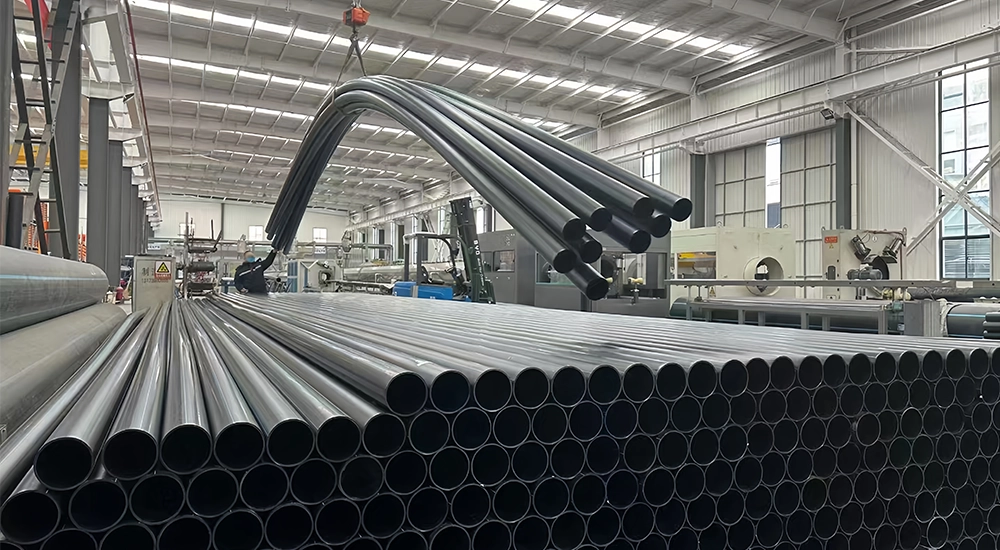
Pressure Rating, SDR and Wall Thickness Comparison
The most tangible difference between these two materials reveals itself when you compare internal pressure capacities against wall thickness. The chart below breaks down the Nominal Pressure (PN) in bar across various SDRs at a standard 20°C.
| SDR (Standard Dimension Ratio) | PE100 Pressure Rating | PE80 Pressure Rating |
|---|---|---|
| SDR 11 | PN16 (16 bar) | PN12.5 (12.5 bar) |
| SDR 13.6 | PN12.5 (12.5 bar) | PN10 (10 bar) |
| SDR 17 | PN10 (10 bar) | PN8 (8 bar) |
| SDR 21 | PN8 (8 bar) | PN6 (6 bar) |
| SDR 26 | PN6 (6 bar) | PN4 (4 bar) |
Let’s say you’re designing a PN10 (10 bar) water network. You essentially have two routes. You could specify PE100 at SDR17, leveraging a relatively thin wall. Alternatively, you could opt for PE80 at SDR13.6, relying on a much thicker wall to safely trap that exact same pressure.
Going with the PE100 SDR17 option opens up the internal diameter (ID). A wider ID cuts down on friction loss, pushes more volume through the system, and maximizes pumping efficiency over the lifetime of the pipeline.
Applications of PE100 and PE80 HDPE Pipe
Different mechanical properties naturally push PE100 and PE80 into distinct corners of municipal and industrial infrastructure.
PE100 HDPE Pipe Applications:
- Municipal potable water supply networks (trunk mains)
- High-pressure gas transmission pipelines
- Industrial fluid transport and chemical processing lines
- Mining slurry and tailings transport
- Large-diameter outfall pipes and pressure vessels
PE80 Applications:
- Medium and low-pressure gas distribution branches
- Rural water supply and gravity-fed systems
- Agricultural irrigation networks
- Low-pressure drainage and sewage management
- Cable protection conduit systems
PE100 vs PE80 for Water, Gas and Industrial Projects
Pinpointing the ideal grade means looking closely at the unique demands, safety margins, and compliance standards governing your specific sector.
Water Supply Projects
For fresh municipal water grids, PE100 is the undisputed champion. It aligns perfectly with ISO 4427 and EN 12201 standards. The material’s impressive pressure threshold guarantees safe, long-haul potable water delivery, while its resistance to chemical disinfectants keeps water quality pristine for decades.
Gas Pipeline Projects
The gas industry relies heavily on both materials, but in very different ways. PE100 dominates high-pressure transmission mains where structural failure simply isn’t an option. Meanwhile, PE80 (frequently labeled MDPE in this space) serves as the traditional backbone for residential gas branches. Its forgiving flexibility makes it incredibly easy to coil and snake through crowded underground utility zones.
Industrial Projects
Step into a harsh industrial setting—think wastewater plants, chemical processing facilities, or aggressive mining sites—and PE100 becomes mandatory. The higher density delivers uncompromising chemical resistance, and its rugged abrasion tolerance easily handles abrasive mining slurries.
Cost, Availability and Procurement Considerations
Smart procurement requires looking past the initial price tag of the raw resin. Total cost of ownership hinges on a mix of manufacturing realities and logistical hurdles.
Resin Cost vs. Pipe Cost Breakdown
- Resin Grade: On a per-kilogram basis, virgin PE100 resin commands a higher price than PE80.
- SDR and Wall Thickness: Because PE100 hits target pressure ratings with a thinner wall (higher SDR), it consumes far less raw material per meter.
- Final Cost: The math works out in your favor. A finished PE100 pipe frequently costs less per meter than a PE80 pipe engineered for the exact same pressure class.
Logistics and Freight
Shaving off wall thickness drastically drops the pipe’s overall weight. When shipping massive export orders, this translates directly to cheaper freight, easier handling, and lower heavy-lifting costs on the job site.
JQ PE Pipe Factory Capabilities
Partnering with a high-output manufacturer guarantees your project stays on schedule. JINQUAN runs a sprawling 200-acre facility, pushing out more than 100,000 tons annually.
- Size Range: DN16 up to DN3000 (These massive diameters heavily favor PE100 to maintain structural integrity).
- Lead Time: Standard specs ship fast, usually within 7 to 15 days.
- Fittings Support: They supply a complete lineup of matching HDPE fittings (butt fusion, electrofusion, socket fusion, fabricated, PP compression) alongside professional welding machines.
- Compliance: Every batch meets strict ISO 4427, DIN 8077/8078, CE, ISO 9001, and ISO 14001 standards.
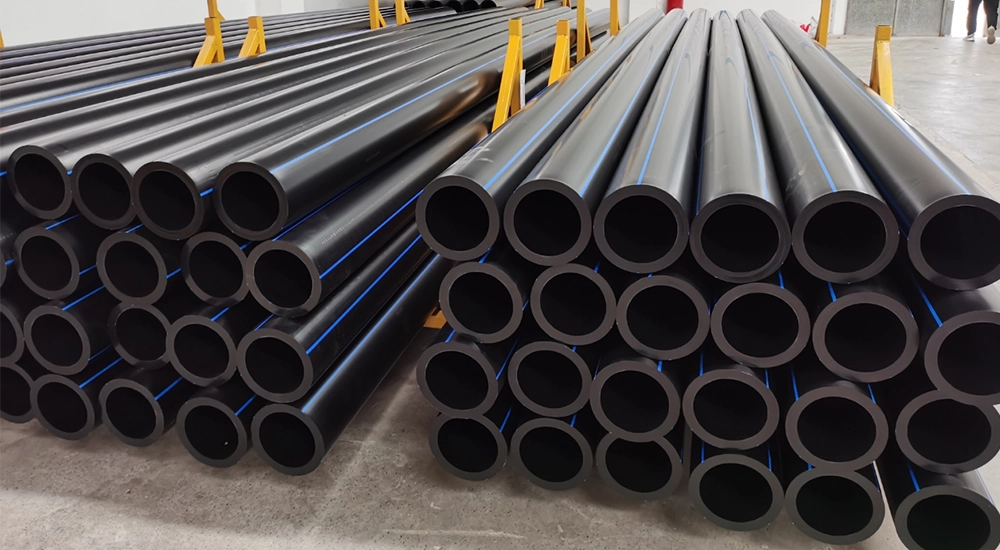
How to Choose Between PE100 and PE80 HDPE Pipe
Avoid costly specification errors by running your pipeline design through a strict evaluation process before signing any purchase orders.
Buyer Selection Checklist
- 1. Required Operating Pressure (PN): Pushing past PN10? PE100 is your best bet for both safety and material efficiency.
- 2. Flow Rate Requirements: If maximizing internal diameter is vital to keep pumping costs low, lean toward PE100 at a higher SDR.
- 3. Installation Method: Trenchless methods, like horizontal directional drilling (HDD), demand the superior tensile strength and scratch resistance found in PE100.
- 4. Standards Compliance: Always cross-reference your chosen grade against local municipal codes and global benchmarks (like ISO 4427).
Supplier Evaluation Checklist
- Does the factory extrude using 100% virgin resin, totally free of recycled impurities?
- Can they supply the matching pressure-rated fittings and the necessary welding gear?
- Are they transparent with comprehensive testing reports (melt flow rate, hydrostatic strength, dimensional checks)?
- Do they genuinely have the production bandwidth to hit aggressive project deadlines?
Common Mistakes When Comparing PE100 and PE80 Pipe
Misunderstanding the subtle differences between these polyethylene grades leads to frequent procurement and installation headaches.
Ignoring SDR Differences
The classic trap is comparing pressure ratings without factoring in the SDR. Buyers often assume PE100 automatically means “stronger.” In reality, a PE80 pipe at SDR11 handles more pressure (PN12.5) than a PE100 pipe at SDR17 (PN10).
Overspecification
Throwing premium, high-pressure PE100 pipe at a low-pressure, gravity-fed agricultural irrigation setup is a massive waste of capital. For these basic applications, PE80 (or even a lower grade) performs flawlessly and keeps budgets intact.
Mixing Materials Blindly
Never assume you can butt-fuse PE100 and PE80 pipes using identical heating and cooling parameters. Their densities vary, which means their melt flow rates differ. To avoid catastrophic joint failures, installation crews must follow standard DVS guidelines when transitioning between the two grades.
Final Recommendation: Which HDPE Pipe Grade Should You Use?
There is no universal “best” pipe. The right choice depends entirely on the realities of your job site and system demands.
Specify PE100 when:
Your design calls for high internal pressures (PN10 up to PN25), massive diameters (reaching DN3000), or maximum internal flow capacity. It’s also mandatory for punishing trenchless installations. PE100 remains the undisputed heavyweight for heavy-duty industrial and municipal networks.
Specify PE80 when:
You are operating under low-to-medium pressures (anything below PN10). It is also the smartest choice when your routing demands extreme flexibility—like snaking coiled gas lines through urban areas—or when you need to tie into existing, legacy MDPE infrastructure.
Conclusion
Choosing between PE100 and PE80 isn’t just a material preference; it dictates the hydraulic efficiency, safety margins, and bottom-line cost of your entire pipeline. PE100 commands the high-pressure arena. Its superior Minimum Required Strength empowers engineers to specify thinner walls, opening up internal diameters and drastically cutting logistical weight. For modern municipal mains and heavy industrial transport, it remains unrivaled.
Yet, PE80 holds its ground where flexibility is paramount. Snaking gas lines through urban grids or laying low-pressure rural irrigation networks are tasks perfectly suited for PE80. By rigorously assessing your operating pressures, SDR constraints, and trench conditions, your procurement team can secure the exact polyethylene grade needed to guarantee decades of flawless performance.
Frequently Asked Questions
It all comes down to Minimum Required Strength (MRS). PE100 delivers an MRS of 10.0 MPa, easily beating PE80's 8.0 MPa. This bump in material strength means a PE100 pipe hits the exact same pressure rating while using a much thinner wall. Ultimately, this boosts flow capacity, slashes pipe weight, and optimizes material costs, cementing PE100 as the top tier for high-pressure systems.
Not necessarily. While PE100 dominates in crack resistance and pressure capacity, PE80 shines where flexibility matters most. Its superior relaxation resistance makes it perfect for rural water lines and coiled gas branches. Forcing PE100 into a low-pressure, highly routed system often results in expensive overspecification. Match the grade to your specific pressure needs and installation hurdles.
Absolutely. PE80 safely handles potable water and fully complies with international health standards—provided it is extruded from 100% virgin resin with zero toxic additives. You'll frequently see it in gravity-fed rural networks and agricultural setups. That said, modern municipal grids typically default to PE100 simply to secure higher pressure thresholds.
Standard Dimension Ratio (SDR) bridges the gap between outside diameter and wall thickness. A smaller SDR means a thicker wall, which translates to a higher pressure rating. For example, an SDR11 PE100 pipe is rated for PN16. An SDR11 PE80 pipe, however, tops out at PN12.5. To match the PE100 pipe's pressure capacity, the PE80 pipe would need a lower SDR (a much thicker wall).
PE100 gets away with a thinner wall because its base resin boasts a higher hydrostatic design stress. At 20°C, PE100 safely sustains a design stress of 8.0 MPa, whereas PE80 maxes out at 6.3 MPa. This raw mechanical advantage allows PE100 to trap higher internal pressures without failing. Engineers can confidently bump up the SDR, thinning the wall while locking in the required pressure class.
Your operating pressure dictates the winner here. High-pressure transmission mains demand PE100 for its brute strength and rapid crack propagation resistance. On the flip side, PE80 (often called medium-density polyethylene) rules the residential distribution side. Its forgiving flexibility makes it incredibly easy to coil and install in tight, complicated urban trenches.
Here is the catch: while raw PE100 resin usually costs slightly more per kilo, the finished pipe is often cheaper per meter. Because PE100 needs a thinner wall to hit target pressures, it uses significantly less raw material. Combine that reduced material volume with the massive savings in freight and handling (due to lighter weight), and PE100 becomes incredibly cost-effective.
To get a rock-solid technical quote, hand your supplier the exact outside diameter and either your target nominal pressure (PN) or SDR. Don't forget to detail the application, expected operating temperatures, and required compliance standards (like ISO 4427). Finally, sharing your total order volume, delivery deadlines, and final destination allows the factory to calculate accurate freight costs and lock in production timelines.