
HDPE Single Wall Corrugated Pipe for Agricultural Irrigation and Water Distribution
Single Wall Corrugated Pipe for Agricultural Irrigation helps farms, contractors, and buyers compare HDPE pipe features, sizes, applications, installation needs, and supplier selection factors
Table of Contents
What Is HDPE Single Wall Corrugated Pipe for Agricultural Irrigation?
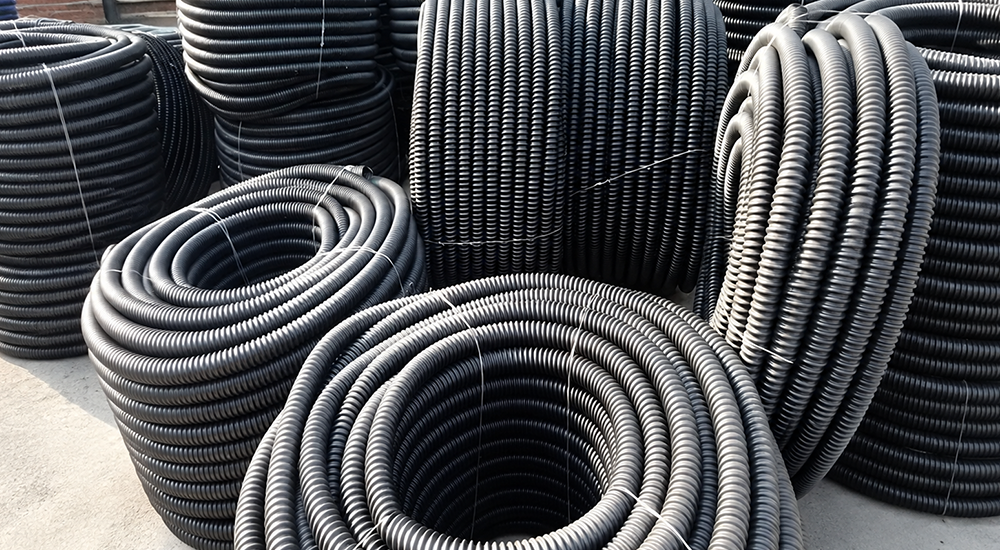
High-Density Polyethylene (HDPE) single wall corrugated pipe acts as a highly flexible, lightweight plastic conduit characterized by its ridged profile on both the inside and outside. Manufacturers designed this piping specifically to handle gravity-flow water management, low-pressure agricultural distribution, and subsurface field drainage. Instead of relying on thick, heavy walls like solid pipes do, it leverages that corrugated geometry to achieve the necessary ring stiffness.
Out in the field, this SWC pipe functions as a vital artery. It moves water effortlessly across rugged terrain or pulls excess moisture away from delicate crop root zones. Gravity entirely drives the flow, whether the water travels through open ends in solid configurations or seeps in through the tiny holes of slotted versions. Because it uses high-grade HDPE, the material offers an incredibly adaptable and budget-friendly approach to farm water management—provided high-pressure conveyance isn’t part of the plan.
Why Single Wall Corrugated Pipe Matters in Agricultural Water Systems
Effective agricultural water management demands materials that strike a smart balance between rugged structural integrity and strict cost control. Single wall corrugated pipe hits this sweet spot by bringing a few distinct mechanical and material advantages to large-scale farming operations.
- Material Efficiency: That corrugated profile generates impressive radial strength while consuming up to 60% less raw plastic than solid-wall alternatives. A steep drop in material usage translates right into massive procurement savings for bulk agricultural buyers.
- Topographical Flexibility: Rigid piping systems fight the landscape. Single wall corrugated pipe, on the other hand, bends continuously to match natural field topography, intricate routing paths, and bumpy terrain. You can essentially skip the headache of plotting out numerous HDPE pipe fittings and complex joint maps.
- Chemical and Environmental Resistance: HDPE is chemically inert. This natural resistance means the HDPE pipe shrugs off harsh agricultural chemicals, including concentrated fertilizers and aggressive pesticides. It easily survives corrosive soil conditions that would chew through metal alternatives in just a few seasons.
- Labor Reduction: The pipe weighs almost nothing compared to traditional options. Farm crews can quickly maneuver, uncoil, and lay down massive runs of farm water distribution lines without waiting on heavy lifting equipment. Project timelines shrink dramatically as a result.
Key Features of HDPE Single Wall Corrugated Irrigation Pipe
Grasping the exact features of corrugated HDPE pipe helps procurement managers match the product’s capabilities directly to their project demands.
- Annular Corrugated Profile: Both the inner and outer walls sport annular corrugations. This design ensures maximum flexibility while retaining the structural muscle required to handle standard soil loads.
- Temperature Tolerance: HDPE handles brutal freeze-thaw cycles like a champion. Where rigid plastics might crack or shatter during a hard freeze, this flexible material safely expands and contracts as the weather shifts.
- Configuration Options: Buyers can spec this HDPE pipe as “Solid” for straightforward, point-to-point water conveyance. Alternatively, “Perforated” or “Slotted” styles tackle subsurface field drainage jobs.
- Filtration Integration: For perforated lines, manufacturers can apply a polyester knit filter sock right at the factory. This protective layer stops fine soil and sand from sneaking in and clogging the drainage system over the years.
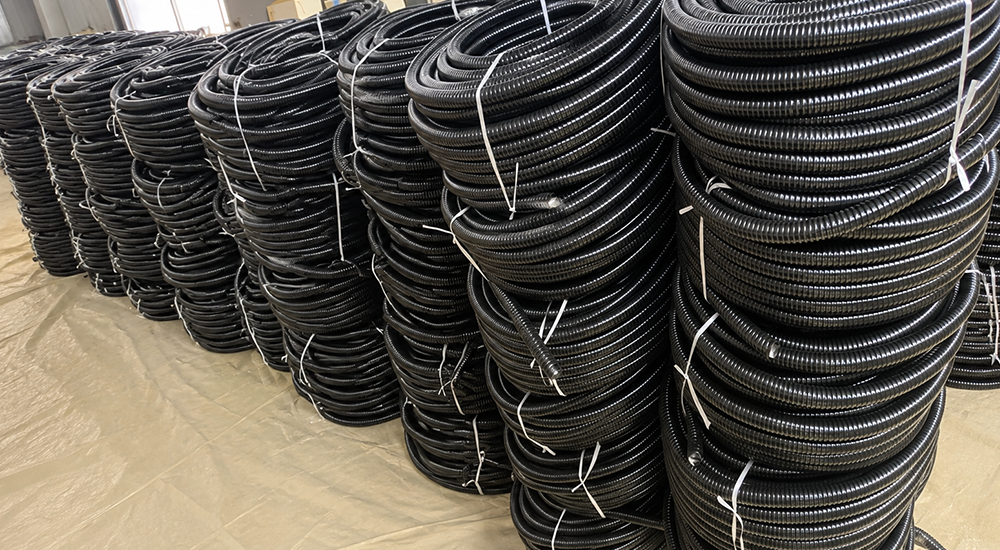
- Service Lifespan: You won’t get the same multi-generational longevity as double-wall or heavy PVC pipes. However, single wall HDPE reliably delivers 10 to 25 years of service in agricultural settings, making it an incredibly smart financial play for seasonal or standard farm layouts.
Common Applications in Agricultural Irrigation and Water Distribution
Farmers and contractors deploy flexible HDPE irrigation pipe across a wide variety of agricultural setups, provided gravity acts as the main driving force.
- Subsurface Drainage: Crews install these lines beneath orchards, wheat fields, and corn fields. The goal is to manage the water table and stop root rot dead in its tracks by pulling excess moisture safely away from the crop’s root zone.
- Low-Pressure Conveyance: It perfectly handles routing water from primary reservoirs, retention ponds, or main supply canals out to localized distribution spots scattered across the farm.
- Greenhouse Systems: Indoor growing requires precise moisture control. These HDPE single wall corrugated pipes manage localized runoff and deliver highly targeted drainage inside controlled agricultural environments.
- Temporary and Seasonal Layouts: Sometimes surface water routing needs to shift. This HDPE pipe is ideal when you have to move, reconfigure, or completely rip out lines between different growing seasons or crop rotations.
Crucial Limitation: Keep in mind that engineers designed this HDPE pipe strictly for gravity and ultra-low-pressure flow. Do not attempt to use it for high-pressure sprinkler systems, deep-well pump mains, or pressurized drip irrigation headers. It simply will not hold.
Technical Specifications Buyers Should Check Before Ordering
Before signing off on a massive bulk order, buyers need to verify a few specific technical parameters to guarantee peak performance in the field. Single wall corrugated pipe sizes vary quite a bit depending on your exact flow requirements.
| Specification Parameter | Standard Range / Details |
|---|---|
| Diameter Range (OD) | 3" to 24" (75mm to 600mm). Common agricultural sizes: 4" (100mm), 6" (150mm), 8" (200mm). |
| Coil Lengths (up to 8") | Standard coils: 100 ft or 250 ft. Maxi-coils: Up to 3,000 ft (approx. 914m) for plow installation. |
| Stick Lengths (10" to 24") | Typically sold in 10 ft (3m) or 20 ft (6m) straight sticks. |
| Material Grade | High-Density Polyethylene (HDPE). |
| Industry Standards | ASTM F667, AASHTO M252 (3"-10"), AASHTO M294 (12"-15"). |
| Joint Performance | Soil-tight joints using mechanical couplers. |
| Coupling Systems | Cleated bell, split couplers, internal couplers, snap couplers. |
| Configuration | Solid wall or Perforated (with or without filter sock). |
How to Choose the Right Pipe Size and Layout for Irrigation Projects
Nailing down the right diameter and layout strategy dictates the ultimate success or failure of any agricultural water distribution system.
Because a single wall corrugated pipe lacks a smooth interior, it naturally carries a higher friction coefficient (Manning’s *n*). To push the exact same volume of water as a smooth-wall pipe, engineers usually have to upsize the corrugated pipe’s diameter.
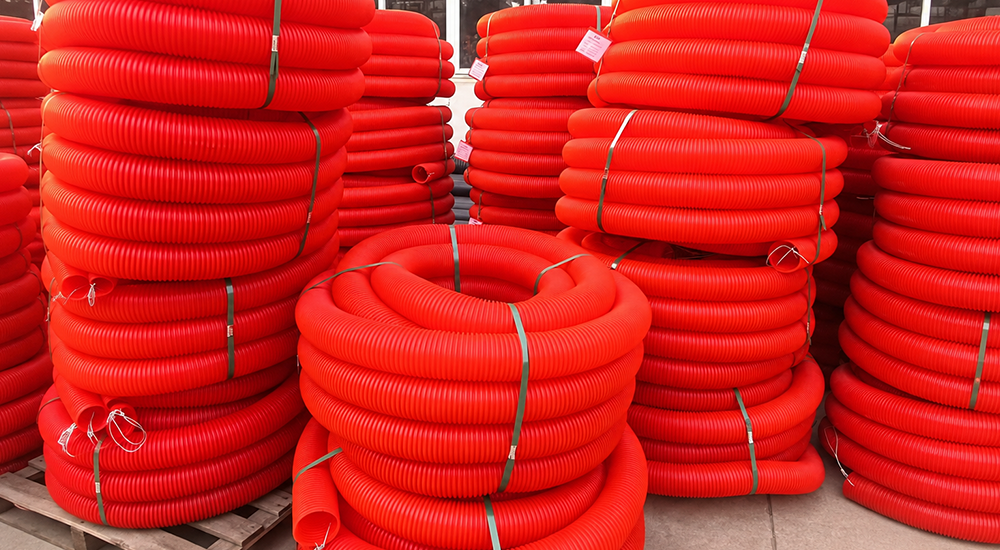
B2B Layout Example: Imagine an irrigation contractor mapping out a seasonal water distribution line. The project demands a specific gravity flow volume across a 2,500-foot run. A 6-inch smooth pipe might technically handle that volume. However, the internal drag of the corrugated wall forces the contractor to bump the spec up to an 8-inch pipe. To slash labor costs and cut down on mechanical joints, they opt for a 3,000-foot maxi-coil. This allows a tractor-mounted drainage plow to rip through the field and install the entire run in one continuous motion.
Beyond flow, buyers have to think about soil loads. If the pipeline needs to cross directly beneath heavy tractor paths or farm access roads, you have two choices. Either bury the pipe much deeper to spread out the weight, or upgrade the section to Double Wall Corrugated (DWC) pipe to avoid a crushing failure.
Single Wall Corrugated Pipe vs Other Agricultural Pipe Options
When comparing HDPE pipe materials for agricultural water distribution, buyers have to balance flow capacity, pressure limits, and overall flexibility to find the right fit.
| Feature | Single Wall Corrugated HDPE | Double Wall Corrugated (DWC) | Smooth HDPE (Solid Wall) | PVC Pipe |
|---|---|---|---|---|
| Interior Surface | Corrugated (High friction) | Smooth (Excellent flow) | Smooth (Excellent flow) | Smooth (Excellent flow) |
| Pressure Suitability | Gravity / Low-pressure only | Gravity / Low-pressure only | High pressure (PN10-PN25) | High pressure |
| Flexibility | Extremely high | Moderate to Low | Moderate | Rigid |
| Crush Resistance | Low (relies on soil embedment) | High (SN4/SN8 ring stiffness) | Very High | High |
| Installation | Continuous coils / Snap couplers | Straight sticks / Bell & Spigot | Butt fusion welding | Glued fittings / Gaskets |
| Cost Tendency | Most economical | Moderate | High | Moderate to High |
Settling the debate between single wall and double wall corrugated pipe really comes down to two factors: interior friction and structural load. Single wall remains much cheaper and significantly more flexible. Meanwhile, DWC sacrifices some of that bendability to deliver 30% better flow capacity and far superior ring stiffness.
Installation, Handling, and Maintenance Best Practices
Proper installation practices dictate the long-term structural integrity and lifespan of any HDPE corrugated pipeline. Remember, flexible HDPE pipes borrow their strength directly from the surrounding soil embedment.
1. Route Planning: Map out the gravity flow path carefully. Steer clear of heavy traffic zones unless you can guarantee deep enough burial to distribute the load safely.
2. Trenching Dimensions: If you choose to trench, cut the width to match the HDPE pipe’s outside diameter (OD) plus an extra 300mm. This gives your crew enough room to achieve proper side-fill compaction.
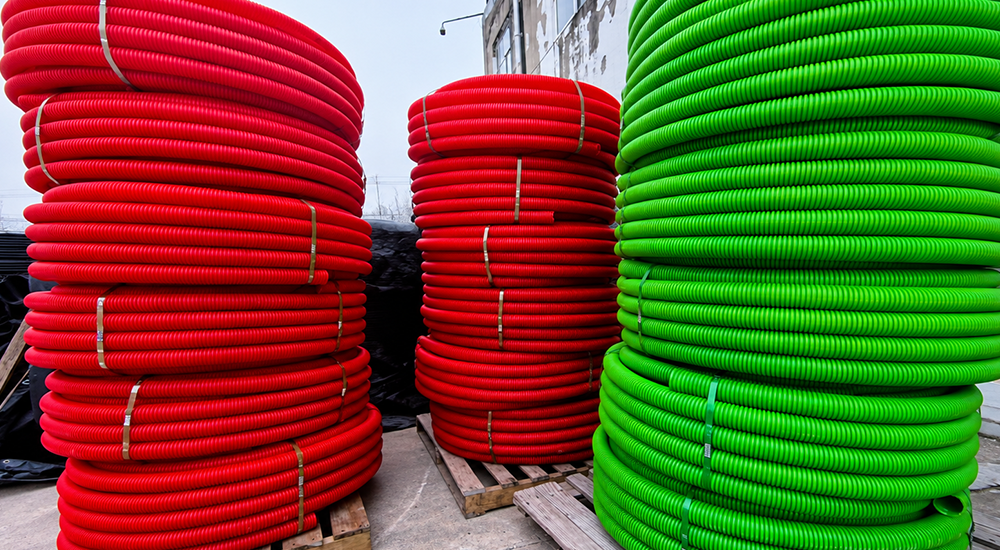
3. Installation Technique: For sprawling agricultural runs, a tractor-mounted drainage plow is your best friend. It feeds coiled HDPE pipe straight into the ground, cutting excavation time down to almost nothing.
4. Burial Depth: Keep the HDPE pipe buried between 0.5 and 1.2 meters deep. That soil buffer protects the plastic from surface loads and heavy butt fusion machinery passing overhead.
5. Connection: Lock everything together using the right snap or split couplers to create soil-tight joints. Always wipe the ends clean before making a connection.
6. Embedment and Backfilling: Pack the backfill soil tightly against the sides of the SWC pipe. Screen the dirt to keep sharp rocks or debris off the corrugated wall, which prevents point-loading punctures.
Cost, MOQ, Lead Time, and Supplier Evaluation for Bulk Buyers
Procurement managers pricing out single wall corrugated pipe for farm irrigation need to look past the simple per-meter price tag. Evaluating the supplier’s total supply chain capability is just as important. Generally speaking, single wall pipe stands as the most economical drainage option on the market, coming in significantly cheaper than standard DWC DN110 benchmarks.
Cost Breakdown Factors:
- Diameter and Length: Pushing for larger diameters and custom maxi-coils will inevitably alter production schedules and shipping logistics, which impacts the final quote.
- Configuration: Tacking on factory-installed polyester filter socks to perforated runs will naturally bump up the per-meter cost.
- Material Quality: Virgin HDPE resin guarantees maximum flexibility and a long service life. Some manufacturers blend in high percentages of recycled resin to slash costs, but that severely increases the plastic’s brittleness.
Supplier Evaluation Checklist:
- Production Capacity: Check the factory’s annual output (for instance, JINQUAN pushes out 100,000+ tons a year). You need to know they can actually process bulk agricultural orders without choking.
- Sample Availability: Never buy blind. Demand physical samples so you can personally inspect the wall thickness, flexibility, and overall resin quality.
- Export Packaging: Make sure the supplier knows how to safely containerize and export massive maxi-coils. Poor packing means crushed SWC pipes upon arrival.
- Lead Time & MOQ: A standard bulk run usually takes 7 to 15 days to produce. Minimum Order Quantities (MOQs) typically start at one full 20-foot or 40-foot shipping container to keep international freight costs reasonable.
Common Mistakes to Avoid When Buying Corrugated Irrigation Pipe
Making an error on a bulk purchase can trigger catastrophic system failures out in the field. Smart buyers actively steer clear of these common pitfalls:
- Mistaking it for Pressure Pipe: Hooking single wall corrugated pipe up to a pressurized irrigation line will blow it apart almost instantly. It is built strictly for gravity flow.
- Ignoring Flow Friction: Forgetting to account for the drag created by the corrugated interior often results in buying a SWC pipe diameter that is simply too small to handle the required water volume.
- Poor Load Planning: Burying single wall pipe under heavy farm traffic areas without enough dirt on top will inevitably lead to crushed, blocked lines.
- Wrong Perforation Choice: Ordering perforated SWC pipe for water conveyance means you will bleed water the entire run. Conversely, using solid pipe for field drainage stops water from entering the system at all.
- Buying on Price Alone: Opting for dirt-cheap pipes made from low-grade recycled plastics is a gamble. They turn brittle and frequently crack during cold-weather installations or rough plow feeding.
Frequently Asked Questions
Q1: What is HDPE single wall corrugated pipe used for in agriculture?
HDPE single wall corrugated pipe primarily handles gravity-flow water management, low-pressure agricultural distribution, and subsurface field drainage. Farm operators rely on these flexible lines to control water tables in orchards, shift surface water between seasonal crops, and drain excess moisture away from wheat and corn fields. Its sheer adaptability makes it a dependable conduit for shuffling water from main reservoirs to localized distribution hubs.
Q2: Is single wall corrugated pipe suitable for irrigation or only for drainage?
It actually works for both, depending entirely on the pipe’s configuration and your system pressure. Solid single wall pipe easily handles low-pressure, gravity-fed irrigation conveyance, moving water directly from a source to a distribution zone. Perforated or slotted versions, on the other hand, handle subsurface field drainage exclusively. Just remember: it cannot survive highly pressurized setups like direct drip lines or heavy-duty sprinkler networks.
Q3: What pipe size is best for agricultural water distribution?
The “best” size hinges entirely on your required water volume and the friction coefficient of that ridged interior. Standard agricultural diameters span from 4 inches (100mm) up to 8 inches (200mm) for field distribution. Because the corrugated inside creates drag, you usually have to upsize the diameter compared to a smooth-wall pipe to hit the exact same gravity flow rate over a long run.
Q4: How long does HDPE corrugated pipe last in farm irrigation systems?
Assuming it is installed correctly and embedded tightly in the soil, HDPE single wall corrugated pipe generally lasts 10 to 25 years on a farm. The actual lifespan fluctuates based on local soil conditions, heavy surface loads, and the quality of the raw resin. Premium HDPE easily fights off agricultural chemicals, aggressive fertilizers, and punishing freeze-thaw cycles to deliver durable performance year after year.
Q5: What is the difference between single wall and double wall corrugated pipe?
Single wall corrugated pipe has ridges on both the inside and outside. This makes it incredibly flexible and budget-friendly, though interior friction hurts its flow efficiency. Double Wall Corrugated (DWC) pipe keeps the ridged exterior for strength but adds a smooth interior lining. That smooth inner wall boosts flow capacity by roughly 30% and offers higher ring stiffness (SN4/SN8), though it costs more and doesn’t bend as easily.
Q6: Can HDPE corrugated pipe be buried underground in farmland?
Absolutely, manufacturers design it specifically for underground burial. Just keep in mind that it gets its structural integrity from proper soil embedment. You have to pack the backfill carefully around the sides to stop the pipe from deflecting. If heavy farm machine will drive over it, ensure a minimum burial depth of 0.5 to 1.2 meters to spread the surface load and keep the flexible plastic from crushing.
Q7: What information should I provide when requesting a bulk quotation?
To get a fast, accurate bulk quote, tell the supplier the exact pipe diameter (OD) you need, the total length, and whether you prefer coils or straight sticks. Clarify if you want solid or perforated walls, and mention if you need factory-installed filter socks. Finally, outline your intended application, the installation environment, the destination country for freight math, and your required delivery timeline.
Q8: How do I choose a reliable HDPE corrugated pipe supplier?
Judge a supplier by looking at their verifiable production capacity, internal quality control, and export track record. A solid partner will gladly mail you physical samples so you can test the resin and flexibility yourself. They should confirm adherence to standards like ASTM F667 and prove they know how to securely pack giant maxi-coils for ocean freight. Checking their lead times and documentation practices will also save you massive headaches on large-scale projects.
Conclusion
Sourcing the right HDPE single wall corrugated pipe for agricultural irrigation demands a solid grasp of gravity-flow dynamics, soil load management, and precise material specs. Agricultural operators can build highly efficient, cost-effective water systems by matching diameter requirements against interior friction, picking the perfect configuration for drainage or conveyance, and locking down strict embedment practices during installation. Ultimately, balancing flexibility, material efficiency, and a supplier’s manufacturing muscle guarantees that bulk investments in corrugated HDPE pay off with reliable, long-term performance across any farming environment.