
HDPE Electrofusion Saddle Fittings: Applications, Installation and Advantages
HDPE Electrofusion Saddle Fittings guide readers through branch applications, installation steps, compatibility checks, and key advantages so buyers can choose the right fitting for reliable PE pipeline tapping.
Table of Contents
What Are HDPE Electrofusion Saddle Fittings?
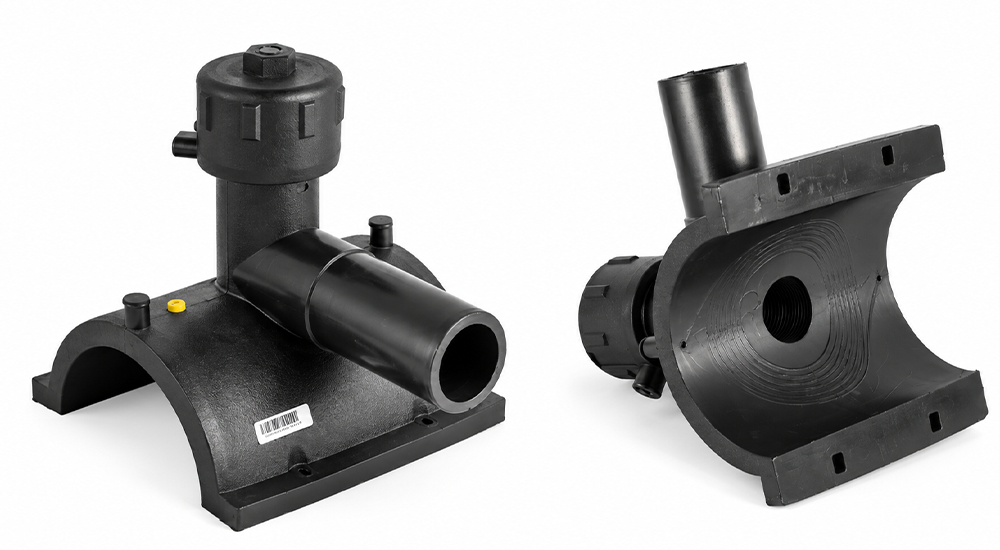
Electrofusion saddle fittings for HDPE pipe act as specialized tapping and branching components for polyethylene pipelines. They feature embedded electrical resistance heating coils, allowing crews to mount them directly onto the exterior of an existing High-Density Polyethylene (HDPE) pipe. This setup lets you create a branch connection or patch a damaged section without ever severing the main line.
For HDPE pipeline engineering and B2B procurement, these fittings are manufactured in several distinct styles to tackle specific project demands:
- Branch Saddles: Ideal for standard bypasses and off-takes on depressurized lines.
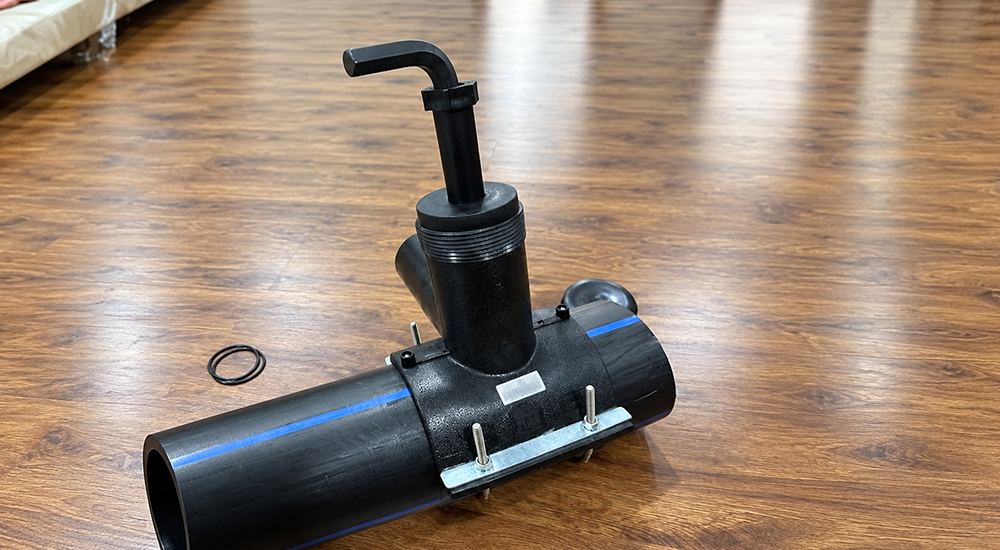
- Tapping Saddles (Tapping Tees): These come with a built-in internal cutter. They are built specifically to tap into live, pressurized mains while keeping the service running.
- Repair Saddles: Designed to permanently seal up localized HDPE pipe damage, like cracks or punctures.
- Spigot Saddles: These provide a spigot outlet, paving the way for subsequent socket or butt fusion connections.
Where Are HDPE Electrofusion Saddle Fittings Used?
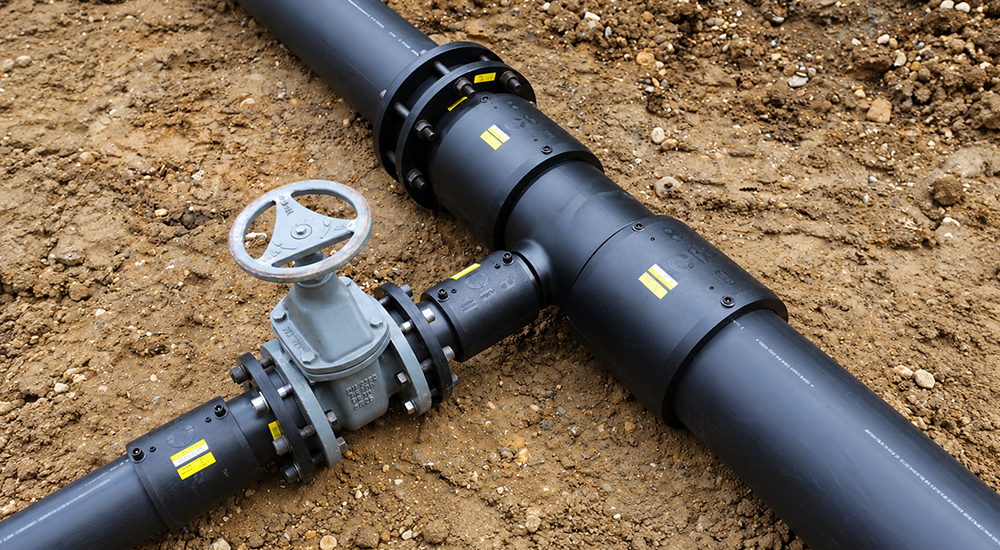
You’ll find these fittings hard at work across global infrastructure sectors where maintaining HDPE pipeline integrity is an absolute must. They are a staple in municipal water supply systems, natural gas distribution networks, mining operations, industrial fluid transfer, geothermal setups, and wastewater management.
Out in the field, HDPE pipe contractors heavily favor electrofusion saddles for retrofitting existing PE mains or running new service lines to commercial and residential buildings. Why? Because trench space is often exceptionally tight. Large hydraulic butt-fusion machines simply cannot fit into confined urban excavations. By enabling secure branch connections in these cramped spaces, electrofusion saddles drastically cut down on civil engineering costs and shorten project timelines.
How Do HDPE Electrofusion Saddle Fittings Work?
The entire process hinges on controlled material expansion and internal heat generation. First, an electrofusion welding machine pushes a precise electrical voltage through standardized 4mm terminal pins into the fitting’s embedded copper coils.
As that current heats the coils, the inner surface of the saddle and the scraped outer surface of the main HDPE pipe begin to melt. This melting polyethylene expands, bridging any allowable gaps between the HDPE pipe and the fitting. The expansion creates intense interfacial pressure within the cooler zones of the saddle. Once the current shuts off, the cooling phase kicks in, solidifying the molten plastic into one homogeneous, leak-proof joint. To take the guesswork out of the process, most modern fittings include melt-flow indicators. These small pop-up pins offer instant visual proof that the material has properly expanded and fused.
What Are the Main Advantages of Electrofusion Saddle Fittings?
Compared to older mechanical branching techniques, electrofusion saddles bring some serious structural and operational benefits to the table.
- Operational Efficiency: Tapping saddles let crews branch off live pipelines. You don’t have to shut down the gas or water system, meaning zero service interruptions for end-users.
- Space Efficiency: The physical footprint required for installation is tiny. You need far less clearance and excavation compared to dropping in a traditional butt fusion tee.
- Automation & Consistency: You don’t have to guess the fusion parameters. By scanning the fitting’s ISO 13950 compliant barcode, the machine automatically sets the exact heating time and voltage, practically eliminating human error.
- High Performance: Because the process creates a molecular bond, the resulting joint is frequently stronger than the pipe itself. These connections easily handle pressure ratings up to 240 PSI (PN16) for water and 125 PSI for natural gas.
- Temperature Resilience: Premium injection-molded saddles don’t require any pre-heating when you fuse them in cold weather, which keeps winter installations moving smoothly.
How to Install HDPE Electrofusion Saddle Fittings Correctly
Creating that permanent, leak-proof bond means you cannot cut corners on preparation. Here is the standard protocol for installing HDPE electrofusion saddle fittings:
1. Marking & Preparation: Outline the exact footprint of the saddle directly on the main HDPE pipe. Check the pipe for ovality. If it is out of round, grab mechanical re-rounding tools to fix the shape before proceeding.
2. Scraping/Peeling: Mechanically scrape the marked zone to strip away the pipe’s UV-degraded, oxidized outer layer. You must remove at least 0.007 inches of surface material to expose the virgin polymer underneath.
3. Cleaning: Wipe down the scraped HDPE pipe and the inside of the saddle using lint-free wipes and isopropyl alcohol (90 percent or higher). Do not touch the cleaned surfaces with bare hands.
4. Clamping: Set the saddle in place and lock it down tight using the manufacturer’s specific strap systems or under-clamps. This step neutralizes HDEP pipe stress and stops any shifting during the melt phase.
5. Fusion: Hook up the electrofusion processor to the 4mm pins. Scan the ISO 13950 barcode so the machine can automatically input the heating time and voltage.
6. Cooling: Keep the clamps completely engaged for the entire cooling duration listed on the barcode. Grab a permanent marker and write the exact dismantling time right on the fitting.
7. Tapping/Testing: Wait until the cooling phase is 100 percent complete. Only then should you pressure test the joint or deploy the internal cutter to tap the live main line.
What Technical Specifications Should You Check Before Buying?
Engineers and procurement managers have to double-check specific technical parameters to guarantee regulatory compliance and system compatibility. Before you source electrofusion saddles for an HDPE pipeline, evaluate these standard specifications.
| Specification Category | Standard Parameters & Requirements |
|---|---|
| Material Grades | Virgin PE100, PE4710, or PE80 resin |
| Main Pipe Size Range (OD) | 63mm to 630mm (Large bore options up to 63 inches) |
| Branch Outlet Size Range | 20mm to 90mm (1/2 inch to 2 inch IPS/CTS) |
| SDR & Pressure Class | SDR11 (PN16) standard for high-pressure lines |
| Max Pressure Rating | Water: Up to 240 PSI (16 Bar) / Gas: Up to 125 PSI |
| Hardware & Interface | 4mm terminal pins, ISO 13950 compliant barcodes |
| Industry Standards | ISO 4427-3, EN 12201-3, ASTM F1055, AWWA C906, NSF/ANSI 61 |
HDPE Electrofusion Saddle Fittings vs Other Branch Connection Methods
Picking the right branch connection method directly impacts your labor time, project budget, and the long-term reliability of the pipeline. Here is a breakdown of how electrofusion saddles stack up against the alternatives.
| Feature | Electrofusion Saddle Fittings | Mechanical Tapping Saddles | Butt Fusion Tees |
|---|---|---|---|
| Connection Mechanism | Molecular fusion via internal heating coils | Physical compression via bolts and rubber gaskets | Molecular fusion via external heating plates |
| Main Pipe Cutting | Not required; mounts to exterior | Not required; mounts to exterior | Required; main pipe must be severed |
| Equipment Required | Portable electrofusion control box | Basic hand tools (wrenches) | Heavy, bulky hydraulic butt fusion machine |
| Joint Longevity | Permanent, leak-proof, maintenance-free | Gaskets degrade and leak over time | Permanent, leak-proof, maintenance-free |
| Best Use Case | Live tapping, confined trenches, permanent infrastructure | Wet/muddy trenches, connecting PE to metal/PVC | New pipeline construction with ample trench space |
How to Choose the Right Fitting for Your Project
Locking down the correct branch connection solution for PE100 pipe means matching the hardware to your exact field conditions.
Start by verifying the pressure ratings. The Standard Dimension Ratio (SDR) of the fitting needs to match—or exceed—the SDR of your main pipeline. A quick rule of thumb: never put an SDR17 saddle on a high-pressure SDR11 line. Next, look at the application itself. If you are working with a live, pressurized main, you need a tapping saddle with a built-in cutter. If the line is completely depressurized and you are building out a new manifold, a standard branch saddle is the way to go.
Don’t forget about resin compatibility. High-grade PE100 fittings typically fuse without issue to PE80, PE3408, and PE4710 pipes. When you are weighing your options, lean toward suppliers with factory-direct capabilities. Partnering with an established manufacturer like JINQUAN opens the door to custom configurations, field-testing samples, and extensive quality control documentation.
Common Installation Mistakes and Failure Risks
Even top-tier HDPE electrofusion saddle fittings will fail if your crew ignores basic installation protocols. The biggest offender? Insufficient scraping. If you fail to strip away that UV-degraded oxide layer, the molten plastics simply won’t mix, leaving you with a brittle, weak joint.
Contamination is another massive risk. Touch the scraped area with your bare hands? The fusion will likely fail. The same goes for using dirty rags or skipping the 90 percent isopropyl alcohol wipe-down. Then there is improper clamping. If the saddle is off-center or the clamps fail to neutralize pipe stress, molten plastic can escape the fusion zone—a failure known as a blowout.
Patience is also critical. Pulling the clamps off before the barcode’s mandatory cooling time has elapsed will warp the joint, guaranteeing a leak either immediately or down the road. Finally, never try to electrofuse in wet weather without a protective tent. Moisture trapped in the fusion zone quickly turns to steam, creating dangerous voids inside the joint.
Supplier Evaluation, Lead Time, and Final Recommendation
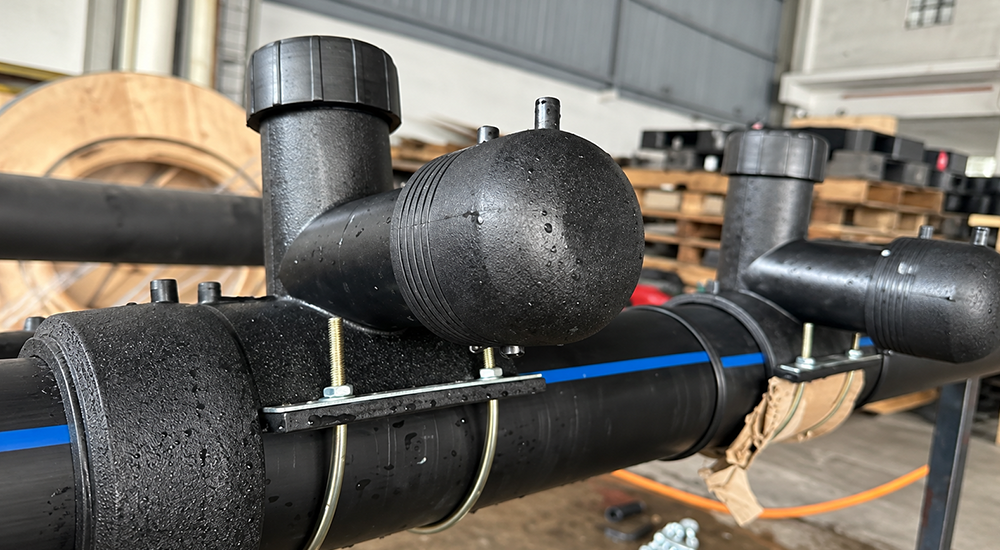
Sourcing a dependable HDPE saddle fitting supplier for bulk orders requires a close look at their logistical efficiency, production capacity, and quality certifications. Any serious B2B supplier needs to carry ISO 9001 and CE certifications, backed by material testing approvals like SGS or NSF for potable water use.
JINQUAN fits this profile well, operating a massive 200-acre manufacturing facility with an annual output topping 100,000 tons. This scale ensures they can fulfill bulk orders without missing a beat. Standard delivery lead times generally run between 7 and 15 days. For procurement teams, buying factory-direct cuts out middleman markups. It also provides flexible Minimum Order Quantities (like 50 pieces for standard sizes) and guarantees secure export packaging utilizing heavy-duty cartons or wooden boxes.
Frequently Asked Questions
Q1: What pipe sizes can HDPE electrofusion saddle fittings connect to?
These fittings are incredibly versatile. The outside diameter (OD) of the main pipe usually ranges from 63mm up to 630mm, though you can request custom large-bore sizes up to 63 inches. For the branch outlets, expect sizes between 20mm and 90mm (1/2 inch to 2 inch IPS/CTS). This range covers the vast majority of service line connections.
Q2: How long should an electrofusion saddle joint cool before pressure testing?
The manufacturer strictly dictates the cooling time, and that exact duration is hardcoded into the ISO 13950 barcode you scan during setup. Crews must leave the mechanical clamps fully tightened for this entire period. Do not pressure test or tap the main line until this cooling phase is completely finished, or you risk warping the joint.
Q3: Can HDPE electrofusion saddle fittings be used for gas pipelines?
Absolutely. They are a perfect match for natural gas distribution networks. Premium PE100 electrofusion saddles create a leak-proof, permanent molecular bond that easily satisfies strict gas industry regulations. They safely handle gas pressures up to 125 PSI and are a go-to choice for tying in residential gas lines without shutting down the broader network.
Q4: What pressure class should I choose for my application?
Always select a fitting with an SDR rating that matches or exceeds your main pipeline’s pressure class. SDR11 (PN16) serves as the industry benchmark for high-pressure gas and water applications, handling up to 240 PSI for water systems. Slapping a lower pressure class fitting onto a high-pressure line is a recipe for a catastrophic blowout.
Q5: Are electrofusion saddle fittings better than mechanical tapping saddles?
If you are building permanent PE pipeline infrastructure, electrofusion saddles win out every time. Mechanical saddles depend on bolts and rubber gaskets. Over time, those components degrade, shift, and inevitably leak. Electrofusion saddles, on the other hand, form a maintenance-free molecular bond. You should really only use mechanical saddles when fusion is physically impossible—like in heavily flooded trenches or when connecting a PE pipe to metal.
Q6: What causes electrofusion saddle joints to fail?
Product defects are rarely the issue. The vast majority of failures stem from sloppy installation practices. The usual suspects include failing to scrape off the pipe’s oxidized layer, contaminating the fusion zone with dirt or bare hands, clamping the fitting incorrectly, and yanking the clamps off before the joint has properly cooled.
Q7: What documents should a supplier provide before purchase?
A trustworthy B2B manufacturer will hand over plenty of documentation to prove their regulatory compliance and product quality. Expect to see ISO 9001 factory certifications, CE marking, specific material data sheets (like virgin PE100 resin specs), third-party testing reports from labs like SGS or NSF, and comprehensive technical drawings detailing dimensional tolerances and pressure ratings.
Conclusion
Ultimately, HDPE electrofusion saddle fittings offer the most structurally sound, efficient, and reliable way to tap and branch polyethylene pipelines. Because they use internal heating coils to forge a permanent molecular bond, they completely bypass the long-term leakage issues you get with mechanical gaskets. Yes, they demand strict adherence to scraping, cleaning, and cooling rules. However, their ability to drop into confined spaces and connect without severing the main pipe makes them an invaluable asset for modern industrial, natural gas, and municipal water projects. Just remember that success in the field comes down to matching SDR pressures, verifying resin compatibility, and working with a manufacturer that delivers certified, consistent quality at scale.